




Open-source alternatives to Jira Service Management

GLPI is a free, open-source Jira Service Management alternative for internal IT support, with tickets, a self-service portal, problem and change management, and an asset inventory built in. Jira Service Management is priced per agent beyond its free plan and is tied to Atlassian’s Jira; GLPI runs on your own server with no per-agent price.

6 alternatives Free apps Our pick: GLPI

At a glance

App Good for Code Import from Jira Service Management Ease of use
GLPI Internal IT teams that want tickets and an inventory of every computer in one tool Code Open source Import from Jira Service Management No Some setup
Request Tracker IT and operations teams that work by email and want queues and rules shaped exactly to them Code Open source Import from Jira Service Management Partly Some setup
Windshift Teams leaving Jira that want sprints, a service desk and test runs in one app, with their Jira history Code Open source Import from Jira Service Management Partly Easy
Frappe Helpdesk Small support teams and ERPNext users that want email tickets with SLAs Code Open source Import from Jira Service Management No Some setup
iTop IT teams that want tickets linked to a CMDB of their services, servers and devices Code Open source Import from Jira Service Management Partly Some setup
OTOBO IT and service desks that want OTRS-style queues, SLAs and processes with no fee per agent Code Open source Import from Jira Service Management No Some setup

Why look for an alternative to Jira Service Management?

Jira Service Management is Atlassian's service desk, built on Jira, with request queues, a help portal, SLAs, incident and change management and asset tracking.

People look for an alternative because it is priced per agent beyond its free plan, and it is tied to Jira and Atlassian's cloud. IT teams that want their help desk and inventory on their own server, without paying per agent, often look at self-hosted tools. GLPI is an IT service desk with a full asset inventory built in, and no per-agent price; iTop builds its service desk around a CMDB of services and their dependencies; Frappe Helpdesk is a lighter ticket system for teams that only need request queues and SLAs. Windshift puts a service desk and a Jira-style tracker in one app.

The alternatives, compared

GLPI

Our pick

A self-hosted IT service desk with an inventory of every device.

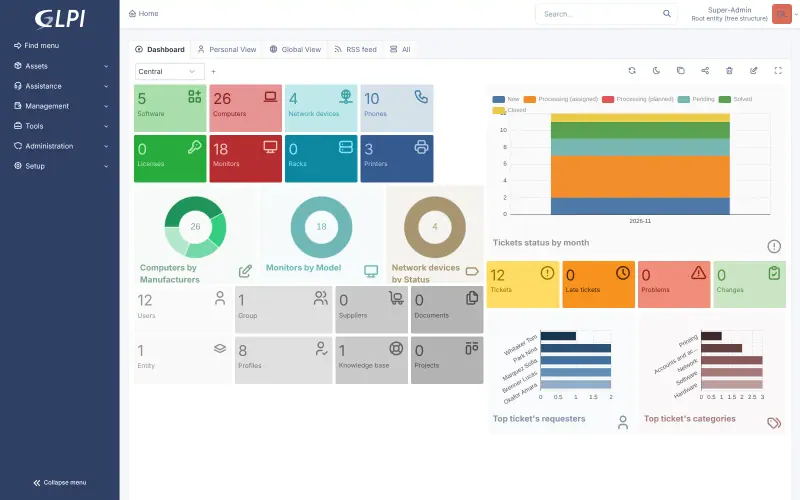
An internal IT service desk with tickets, response-time targets, a self-service portal, problem and change management and a knowledge base, plus an inventory of every computer and device. It does not link to Jira projects the way Jira Service Management does, so development work is tracked in another tool.
Some setup Open source

An open-source ticketing system for support, IT and ops requests.

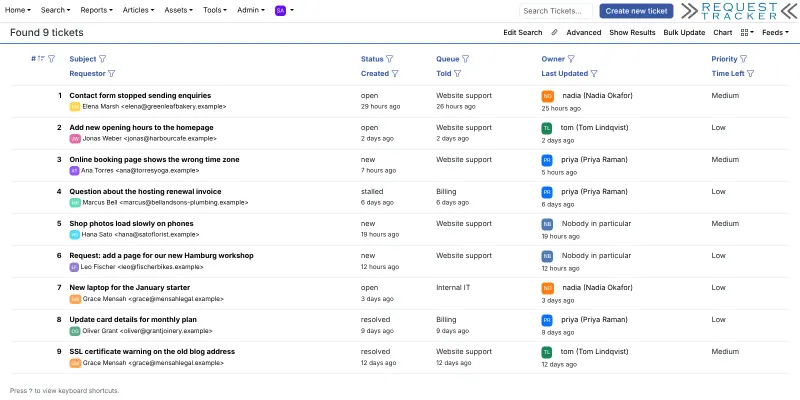
An internal request tracker for IT and operations teams: tickets by email and a self-service portal, queues with your own statuses and lifecycles, approvals, SLAs, assets linked to tickets, time tracking and fine-grained rights, with no fee per agent. It does not link to Jira, its interface is dense rather than modern, and it takes real setup, including a mail server for email.

Some setup Open source

Issue tracking with a service desk and test runs, like Jira.

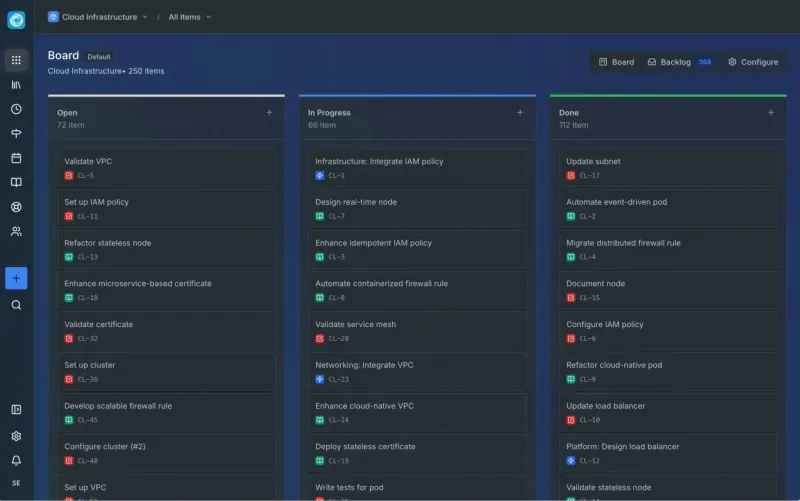
A service desk inside a Jira-style tracker: a customer portal, email intake, request types, queues, SLAs with working calendars, approvals and an asset register, and each request is a work item developers can pick up in the same app, much as Jira Service Management links to Jira. Its Jira importer brings Jira projects and Assets, but request types, queues and SLAs are not on its list. It is young, at version 0.9, and SAML and audit logs are in its paid Pro edition.

Easy Open source

Self-hosted help desk for email tickets, SLAs and a customer portal.

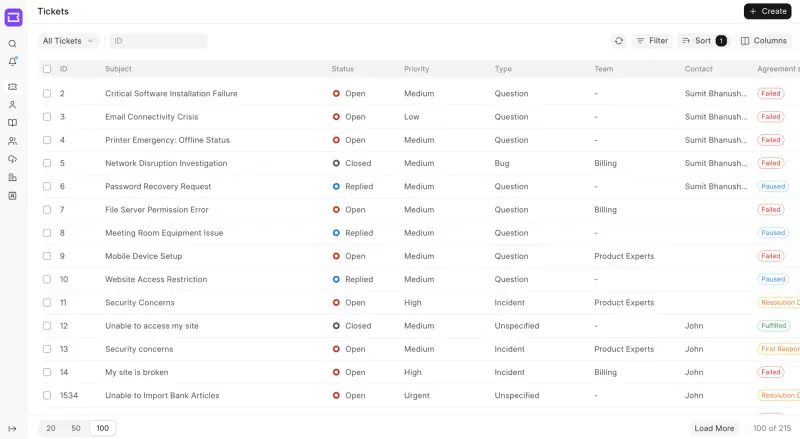
A lighter help desk for internal or customer requests: tickets by email and a portal, SLAs with working hours, teams and assignment rules, saved replies and a knowledge base, with no fee per agent. It has no problem or change management, no asset inventory and no link to Jira, so it fits teams that use Jira Service Management as a simple request queue.

Some setup Open source

A self-hosted IT help desk linked to a CMDB of everything you run.

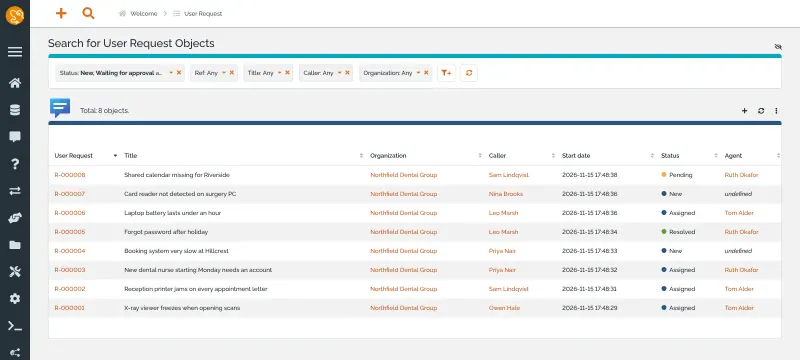
An ITIL service desk built on a CMDB: requests, incidents, problems and changes linked to the servers, applications and business services they affect, with SLAs, service contracts and a user portal. It does not link to Jira, takes real setup, and needs a free extension for email-to-ticket.

Some setup Open source

A self-hosted help desk and IT service desk that grew out of OTRS.

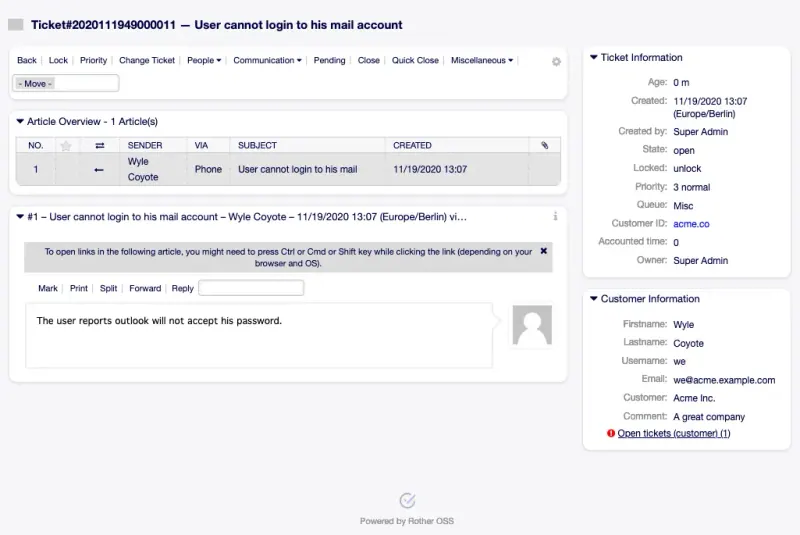
A full ITSM service desk: queues fed by email, phone and a portal, SLAs and escalations, a graphical process editor, automations and a customer portal, with free add-ons for incident, problem and change management, a CMDB and a FAQ. It is not tied to Jira, so development work stays in another tool, and it has a dense interface and needs a large server.

Some setup Open source

Moving from Jira Service Management

There is no Jira Service Management importer. Set up your ticket categories, SLAs and technician profiles in GLPI, connect LDAP or Active Directory for your users, and build your request forms in its service catalogue. Install the GLPI Agent on your computers so the inventory fills itself. Add a mailbox for tickets sent by email, then switch your portal link and support address to GLPI and finish open requests in Jira Service Management. With Frappe Helpdesk, create your teams, ticket types and SLAs, connect your support mailbox, and point people to its customer portal; past requests stay in Jira Service Management. With OTOBO, set up queues, agents, SLAs and services, add your support mailbox as a mail account, install the free ITSM and FAQ add-ons, and rebuild your request forms as processes; past requests also stay in Jira Service Management. With iTop, set up your organisations, teams, services, contracts and SLAs first, then bring in people, devices and other records from CSV files exported from Jira Service Management, since iTop's CSV import loads any kind of record. Add the free Mail to ticket extension if people open tickets by email, and give staff the address of iTop's user portal. With Request Tracker, create a queue for each team, design its lifecycle of statuses, set up groups and rights, and connect a mail server so requests sent by email become tickets. Past requests can be loaded from CSV exports with Best Practical's free CSV import extension, which is not installed on this template. Windshift's Jira importer connects to Jira Cloud or Data Center with an API token and brings projects, issues with their comments and attachments, and Jira Assets; request types, queues and SLAs are not on its list, so set those up again before you switch your portal link and support address to Windshift.

Questions

What is the best open-source alternative to Jira Service Management?

Start with GLPI. If you want something simpler, try Windshift. All 6 are free and open source.

Does GLPI work with Jira?

Not out of the box. GLPI can send ticket events to other tools through webhooks, but it does not link tickets to Jira issues by itself.

Should I choose GLPI, iTop, OTOBO, Frappe Helpdesk or Windshift?

Choose GLPI for an IT service desk with problem and change management and an inventory of every device, found by its agent. Choose iTop if tickets should be tied to a CMDB of services and applications, with impact analysis and service contracts. Choose OTOBO for OTRS-style queues, SLAs and multi-step approval processes, with ITSM as a free add-on, on a large server. Choose Frappe Helpdesk for a simpler request queue with SLAs, a portal and a knowledge base, for IT or customer support. Choose Windshift if your service desk and your developers should share one Jira-style app, with requests that become work items.

Can GLPI manage projects too?

Yes, simple ones. GLPI includes projects and tasks with Gantt and Kanban views for IT work; for software projects, a dedicated tracker fits better.

Is Request Tracker a good fit for internal IT requests?

Yes. Request Tracker is popular with university IT departments, hosting companies and operations teams, and has queues, approvals, assets and lifecycles you shape yourself. It takes more setup than a ready-made service desk.

Are these Jira Service Management alternatives really free?

Yes, GLPI, Request Tracker, Windshift, Frappe Helpdesk, iTop and OTOBO are free. To run them you need Cloudgate and a server. Use hosted Cloudgate, which can also provide the server, or install Cloudgate on a server of your own for free. Cloudgate's plans and prices are at cloudgate.octabyte.io/pricing. One server can run several apps.

Do I need a developer to replace Jira Service Management?

No. Cloudgate installs the app you choose on your server and gives it a secure web address, and you use it in your browser instead of Jira Service Management.