
O

Open-source alternatives to Onetime Secret

PrivateBin is a free, open-source Onetime Secret alternative for sending a password or private note as a link that works once and then deletes itself, encrypted in the browser before it reaches your server. Onetime Secret’s hosted service keeps branding, longer expiry and team members for paid plans; self-hosted PrivateBin runs on your own web address at no cost, with expiry times you choose.

3 alternatives Free apps Our pick: PrivateBin

At a glance

App Good for Code Ease of use
PrivateBin Teams that send passwords or private notes and want the link to expire Code Open source Easy
Yopass Offices and IT teams handing logins to staff, clients or contractors Code Open source Easy
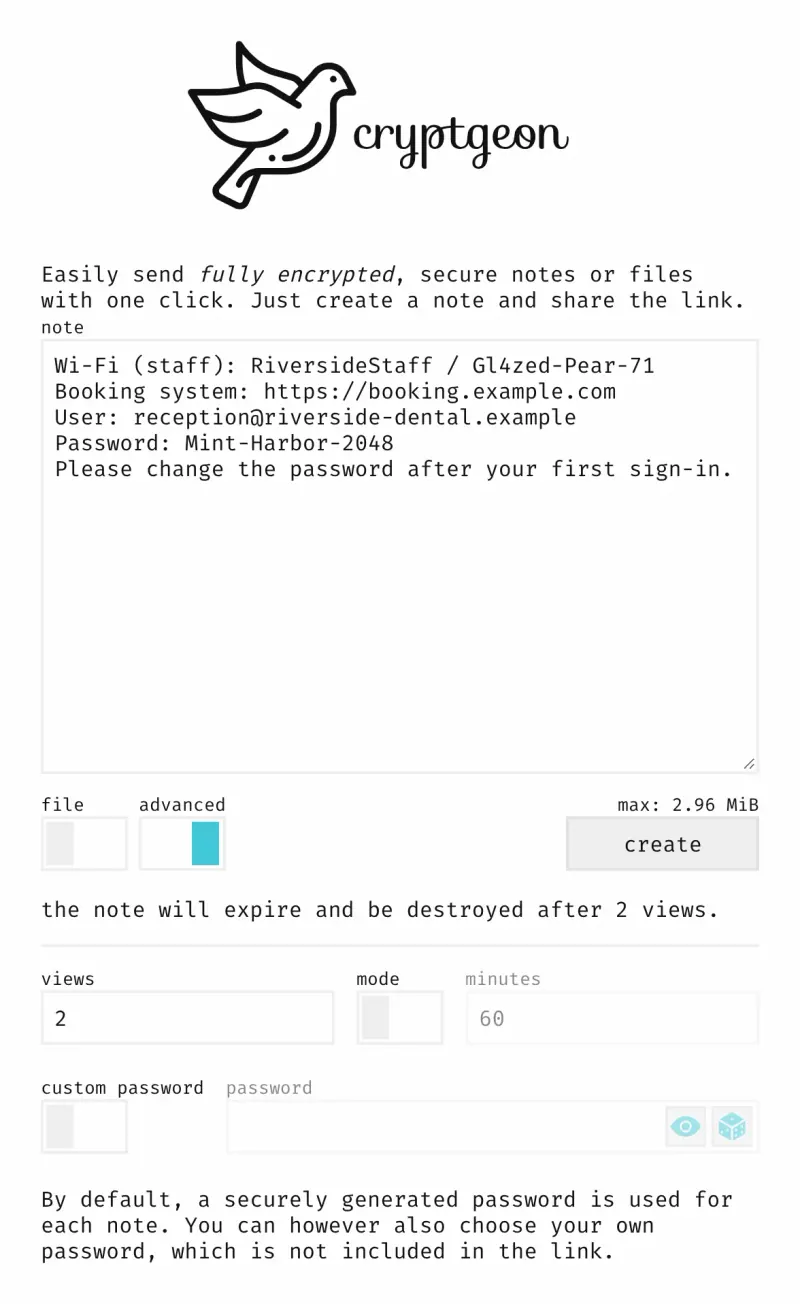
cryptgeon Small teams handing over logins, keys or a few files that should leave no copy behind Code Open source Easy

Why look for an alternative to Onetime Secret?

Onetime Secret is a hosted service for sharing a password or private message as a link that works only once. Its free plan keeps secrets for up to 14 days, and its paid plans add custom branding, a 30-day expiry, team members and single sign-on.

People look for an alternative when they want secret links on their own web address without a monthly plan, or want to be sure the service cannot read what they send. A self-hosted PrivateBin creates one-time links at no cost, encrypts each note in the browser before it is sent, and lets you choose how long links last. Yopass does the same, built only for handing over passwords and small files, with the key sendable apart from the link, and cryptgeon keeps each encrypted note only in memory, for a set number of views or minutes. Onetime Secret's own code is open source, so self-hosting it is another option.

The alternatives, compared

PrivateBin

Our pick

Share passwords and notes as encrypted, self-destructing links.

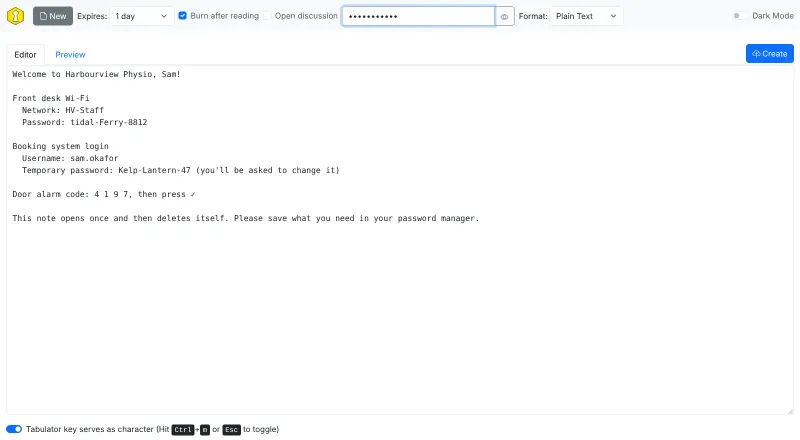
Sends a password or private note as a link that can be opened once and then deletes itself, with an optional password and an expiry you choose, from five minutes to never. The text is encrypted in the sender's browser, so your server stores only data it cannot read. It has no team accounts, custom branding or single sign-on, and anyone who can open your address can create a link.
Easy Open source

One-time links for sending passwords and small files.

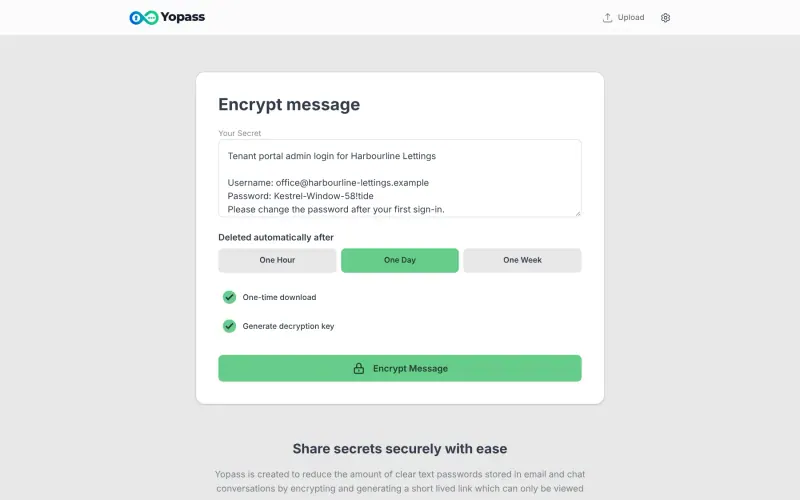
Made for exactly this job: paste a password or pick a small file, choose one hour, one day or one week, and get a link that opens once and then deletes the secret. It is encrypted in the sender's browser, so your server holds only data it cannot read, and the key can be sent apart from the link. It also has a command-line tool. Sign-in, branding and files over 1 MB need Yopass's paid business licence.

What you gain
  • Secrets are encrypted in the browser, so even your own server never sees them
  • Links come from your own web address, with no plan limits or account to sign up for
  • Nobody, sender or recipient, needs an account
What is different
  • There are no accounts, so there is no list of the secrets you have sent
  • Read receipts, sign-in, your own logo and files over 1 MB need Yopass's paid business licence
  • Anyone who can reach your web address can create secrets
Easy Open source

Encrypted notes that self-destruct by views or by timer.

Sends a password, note or a few files as a link that deletes itself after the number of views or minutes you choose, up to 100 views or six hours. It is encrypted in the sender's browser and kept only in memory, never written to disk, and it has a command-line tool. It has no accounts, receipts or way to cancel a sent link, and anyone who reaches your address can create notes.

Easy Open source

Moving from Onetime Secret

There is nothing to move, since secret links are used once. Set up PrivateBin on an address your team will recognise, such as secrets.yourcompany.com, then show people how to create a paste with burn after reading turned on. For passwords, add a paste password and send it by a different channel from the link. Let any Onetime Secret links already sent run out on their own. Yopass needs no setup either: open your address, paste the secret, choose how long it lasts, and send the link. For extra safety, send the short link and the decryption key by different channels. cryptgeon works the same way with no setup: open your address, type the secret, choose views or minutes, and send the link; set your own password on the note if you want to send it separately.

Questions

What is the best open-source alternative to Onetime Secret?

Start with PrivateBin. All 3 are free and open source.

Is Onetime Secret open source?

Yes, its code is MIT-licensed and can be self-hosted. This page compares PrivateBin with Onetime Secret's paid hosted plans; PrivateBin also encrypts every note in the browser before it reaches the server.

What happens if the reader closes the page?

The note is gone. With burn after reading on, PrivateBin deletes it as soon as it is opened and warns the reader not to close the window.

Can I stop strangers from creating links on my PrivateBin, Yopass or cryptgeon?

Not with an account sign-in in the free apps: PrivateBin and cryptgeon have none, and Yopass keeps sign-in for its paid business licence. Anyone who reaches the address can create a link, so keep the address private or put a sign-in in front of it.

Should I choose PrivateBin, Yopass or cryptgeon?

Yopass if you mostly hand over passwords and logins: it is built only for one-time secrets, can send the key separately, and has a command-line tool. PrivateBin if you also share longer notes, code or logs, with expiry times up to never and optional discussions. cryptgeon if you want secrets kept only in memory, never on disk, and links that last a set number of views, up to 100.

Are these Onetime Secret alternatives really free?

Yes, PrivateBin, Yopass and cryptgeon are free. To run them you need Cloudgate and a server. Use hosted Cloudgate, which can also provide the server, or install Cloudgate on a server of your own for free. Cloudgate's plans and prices are at cloudgate.octabyte.io/pricing. One server can run several apps.

Do I need a developer to replace Onetime Secret?

No. Cloudgate installs the app you choose on your server and gives it a secure web address, and you use it in your browser instead of Onetime Secret.