
Open-source alternatives to Auth0

Logto is a free, open-source Auth0 alternative for adding customer sign-in to your own website or app: ready-made sign-in pages, social logins, two-step verification, organisations and roles, with SDKs for more than 30 frameworks, on your own server. Auth0 is a hosted service that keeps your users’ accounts; self-hosted Logto and authentik keep them on your server, and you look after it yourself.

5 alternatives Free apps Our pick: Logto

At a glance

App Good for Code Import from Auth0 Ease of use
Logto Businesses adding customer sign-in, single sign-on and roles to their own website, app or customer portal Code Open source Import from Auth0 Partly Some setup
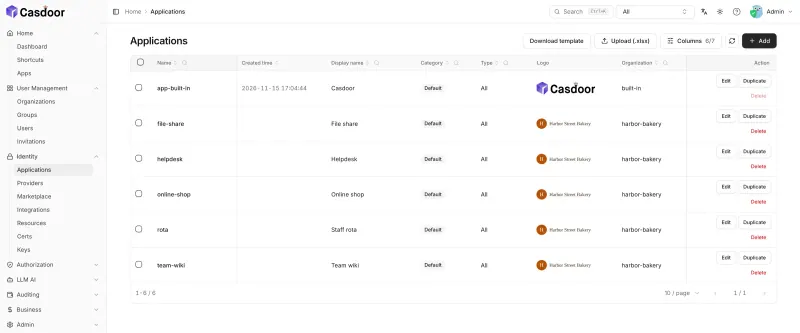
Casdoor Small teams and developers who want one login, with social and two-step sign-in, for several apps Code Open source Import from Auth0 No Some setup
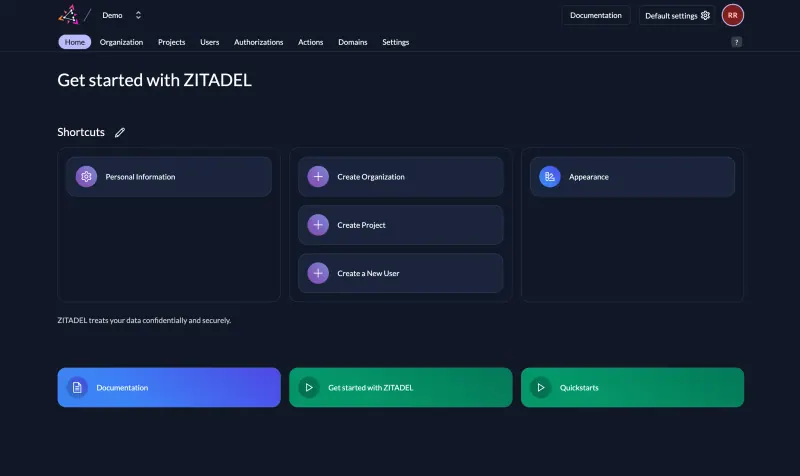
ZITADEL Companies building their own apps that want sign-in for customers and staff, with organisations for business customers Code Open source Import from Auth0 Partly Some setup
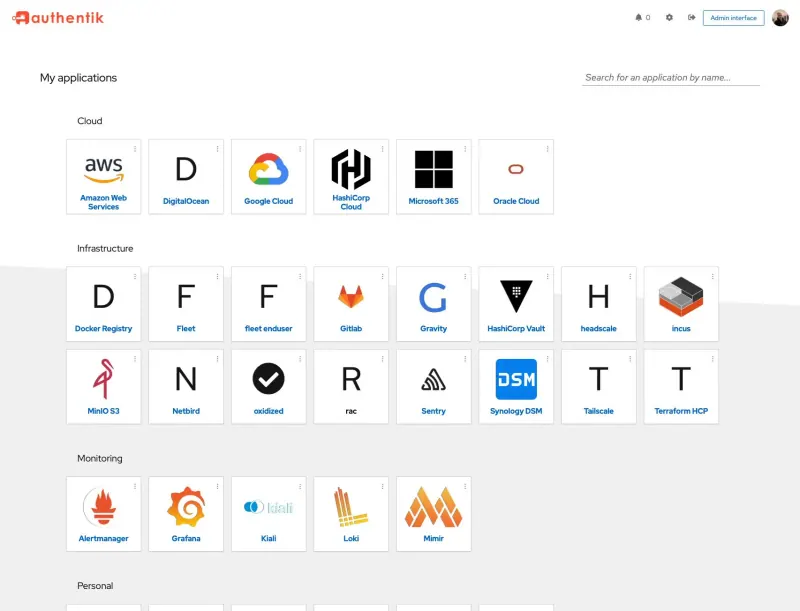
authentik Teams with several apps who want one login and two-step sign-in for all of them Code Open source Import from Auth0 No Some setup
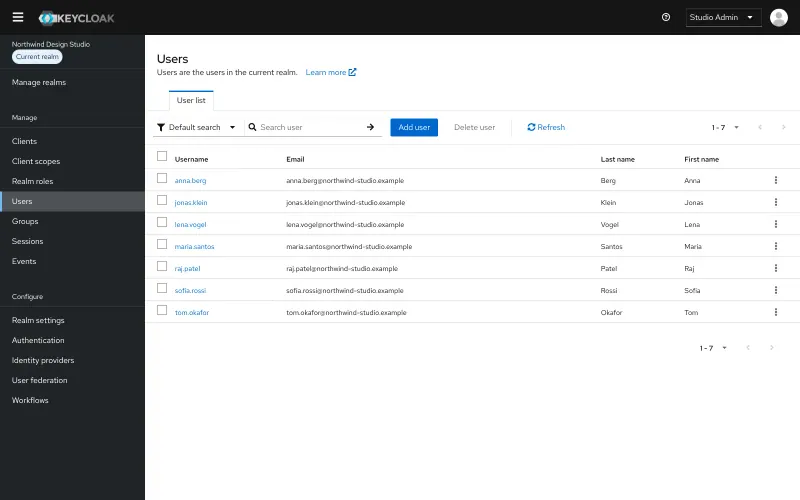
Keycloak Organisations with several apps that want their own single sign-on, with someone technical to run it Code Open source Import from Auth0 No Some setup

Why look for an alternative to Auth0?

Auth0 is a hosted sign-in service for developers: you add login, sign-up and social logins to your own apps and websites with its SDKs, and it stores your users' accounts.

Developers look for an alternative to keep their users' accounts on their own server rather than a vendor's. Logto does Auth0's job most directly, with ready-made sign-in pages, SDKs and organisations for business customers. authentik gives your apps sign-up, sign-in, social logins and two-step verification through standard protocols, and can also handle sign-in for your team's own apps. ZITADEL is also close to Auth0's developer-first shape, with an Auth0 migration guide, and Keycloak is the long-established option with realms for separate user bases. Casdoor is a lighter option with hosted sign-in pages and SDKs in many languages.

The alternatives, compared

Logto

Our pick

Sign-in, single sign-on and user roles for your own apps.

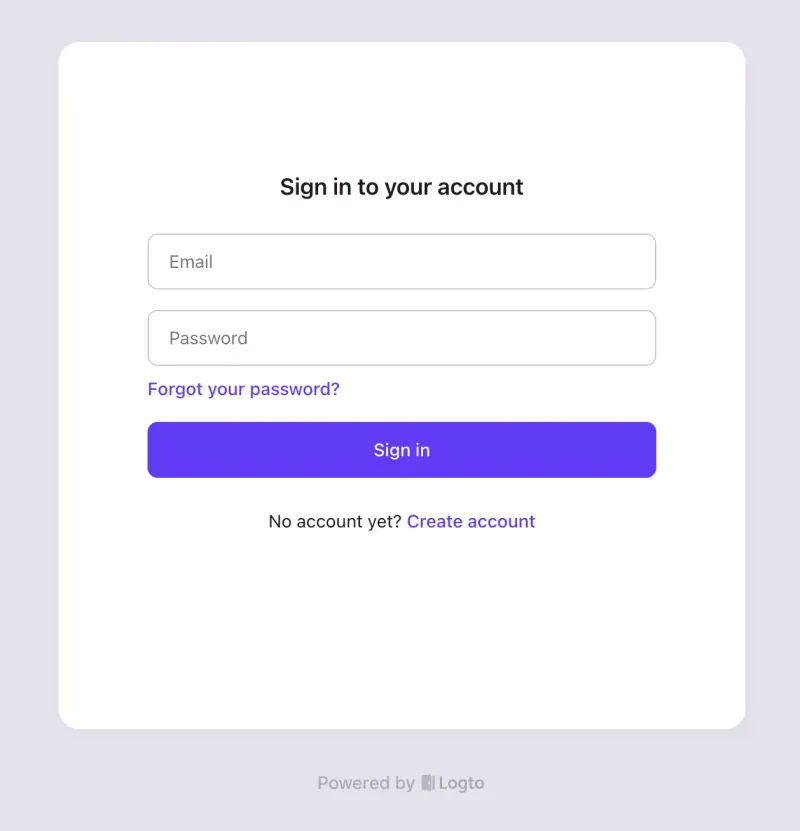
The closest match to Auth0's job: ready-made sign-in, sign-up and password reset pages for your own app, branded with your logo and colours, with social logins, passwordless email or SMS codes, two-step verification and passkeys, organisations with their own roles for business customers, and SDKs for more than 30 frameworks. A few extras, such as hiding the "Powered by Logto" line on sign-in pages, need a paid licence, and you bring your own email service for sign-in codes.

What you gain
  • No bill per active user, and your customers' accounts stay on your own server
  • The same standards as Auth0 and Okta (OpenID Connect, OAuth and SAML), so apps connect in a familiar way
  • Organisations, roles, two-step sign-in and single sign-on included in the free version
What is different
  • You run, back up and update it yourself, where Auth0 does that for you
  • You add your own email provider for sign-in codes and password reset emails
  • The free version has one admin account, one environment and up to three SAML apps
Some setup Open source

Single sign-on and one user list for all your apps, on your server.

A lighter choice for adding sign-in to your own apps: hosted sign-in and sign-up pages, social logins, passkeys and two-step sign-in over OpenID Connect, OAuth 2.0, SAML and CAS, with SDKs for Go, Java, Python, Node.js, .NET, PHP and JavaScript front ends, closer to how Auth0 is used. It adds separate organizations with their own users and branded login pages, and roles and permissions. Some advanced features, such as security policies and push sign-in approval, need a paid Casdoor licence key.

What you gain
  • No per-user fee for single sign-on, social logins and two-step sign-in
  • Your users' accounts and sign-in records stay on your own server
  • One light server holds several organizations, each with its own login page
What is different
  • You connect each app yourself, apart from the Marketplace's one-click apps
  • Some advanced features, such as security policies, push sign-in approval and access reviews, need a paid Casdoor licence key
  • If Casdoor is down, nobody can sign in to the connected apps, so keep it backed up
Some setup Open source

Sign-in, passkeys and single sign-on for your apps and customers.

The closest to Auth0 in shape: sign-up, login, passkeys, social logins and business customers' own logins for your apps, with APIs for everything, SDKs and examples, organisations that keep each business customer's users and branding apart, and a full audit trail. Its makers document moving users from Auth0 through its import API, which takes some scripting rather than one click.

What you gain
  • No fee per active user, and the same features as ZITADEL's own cloud
  • Your users' accounts and sign-in records stay on your own server
  • Organisations for business customers are built in, not a higher plan
What is different
  • Made for developers, so connecting an app takes a few technical steps
  • No catalogue of ready-made connections to business apps like Okta's
  • Moving users from Auth0 is possible with ZITADEL's import tool, but takes some work
Some setup Open source

One login, with two-step sign-in, for all your team's apps.

Handles sign-in for your own apps over OpenID Connect and SAML, with customer sign-up flows, social logins such as Google, GitHub and Apple, two-step verification and passkeys, and sign-in pages you can brand. Auth0 is a hosted service with SDKs for many languages; with authentik you run the service yourself and connect your app through the standard protocols. It is also built for one sign-in across your team's own apps, which Logto is not.

Some setup Open source

Single sign-on for all your apps, with realms for staff and customers.

Adds sign-up, login, social logins, two-step sign-in and passkeys to your own apps over OpenID Connect, OAuth 2.0 and SAML, with login pages and sign-in flows you can change, and realms that keep separate user bases apart. You run and update it yourself, its admin console takes time to learn, and moving users from Auth0 needs custom work for their passwords.

Some setup Open source

Moving from Auth0

With Logto, add your app in its admin console and follow the guide for your framework, then swap Auth0's sign-in library for Logto's SDK or any OpenID Connect library. Add the social logins you used, connect an email service such as SMTP or SendGrid for sign-in codes, and brand the sign-in pages. There is no one-click Auth0 import: Logto's user migration guide shows how a developer exports users from Auth0 and creates them through Logto's Management API, so test it on a few accounts first.

With authentik there is no Auth0 importer, and passwords do not carry over. Set up an OpenID Connect provider for your app in authentik, then point your app's sign-in library at authentik instead of Auth0. Build your sign-up and login flows, add the social logins you used, and brand the pages. Existing users can sign in again with a social login, or reset their password through authentik's recovery flow.

With ZITADEL, create a project and an app for each of your apps, follow its Auth0 migration guide to load your users through its import API, and point your sign-in library at ZITADEL. With Keycloak, create a realm, add your app as an OpenID Connect client and point your sign-in library at it; existing passwords need custom work to carry over, so users may need to reset them or sign in with a social login.

With Casdoor, create an application for your app, add the social logins you used and style its login page, then point your app's OpenID Connect library, or one of Casdoor's SDKs, at Casdoor. There is no Auth0 import either: bring users in from an Excel sheet, or let them sign in again with a social login.

Questions

What is the best open-source alternative to Auth0?

Start with Logto. All 5 are free and open source.

Should I choose Logto or authentik?

Choose Logto if you are adding customer sign-in to your own website, app or SaaS product, especially with business customers who each need their own organisation and roles. Choose authentik if you also want one sign-in for the apps your own team uses, or need LDAP, RADIUS or a login in front of apps that have none.

Where do Keycloak, ZITADEL and Casdoor fit?

ZITADEL is close to Auth0 in shape, with APIs for everything, organisations for business customers and a guide to moving users from Auth0. Keycloak is the long-established option, with realms for separate user bases, for teams with someone technical to run it. Casdoor is a lighter server with SDKs in many languages and separate organizations that each have their own users and login page.

Can customers sign up for my app through these apps?

Yes. Logto gives you ready-made sign-up, sign-in and password reset pages, Casdoor has hosted sign-in and sign-up pages, and authentik, Keycloak and ZITADEL all support customer accounts with sign-up flows, social logins and password recovery.

Do I need an SDK?

No, but it helps. Logto has SDKs for more than 30 frameworks, such as React, Next.js, Flutter and Go, ZITADEL and Casdoor offer their own SDKs, and all five apps work with any library that supports OpenID Connect.

Which features are paid?

In Logto's open-source edition, sign-in pages, social and enterprise logins, two-step verification, organisations and roles are free; a paid licence adds extras such as hiding Logto branding and more than three SAML apps. In authentik, sign-in, sign-up, social logins and two-step verification are free, and the paid Enterprise licence adds features such as enhanced audit logging and ticket support. In Casdoor the same basics are free, and a paid licence key adds features such as security policies, push sign-in approval and access reviews. Keycloak and ZITADEL have every feature in their free projects.

Are these Auth0 alternatives really free?

Logto's open-source edition is free under the MPL-2.0 licence, authentik's under the MIT licence and Casdoor under the Apache-2.0 licence, with no fee per user. Their makers sell paid licences that add extras, such as hiding Logto's branding, authentik's enhanced audit logging or Casdoor's security policies and access reviews. Keycloak is free under the Apache-2.0 licence, with every feature in the free project. ZITADEL is free under the AGPL-3.0 licence, with the same code as ZITADEL Cloud and no fee per active user; its makers sell support and a commercial licence. To run any of them you need Cloudgate and a server: use hosted Cloudgate, which can also provide the server, or install Cloudgate on a server of your own for free. Cloudgate's plans and prices are at cloudgate.octabyte.io/pricing.

Do I need a developer to replace Auth0?

No. Cloudgate installs the app you choose on your server and gives it a secure web address, and you use it in your browser instead of Auth0.