






C

Self-hosted alternatives to Circle

NodeBB is a free, open-source Circle alternative for running an online community: a modern discussion forum on your own domain, with categories, real-time replies, member chat and fine-grained permissions. Circle is a monthly subscription that also takes a fee on payments; self-hosted NodeBB has no monthly or per-member fee, though it has no built-in courses, events or paid memberships.

9 alternatives Free apps Our pick: NodeBB

At a glance

App Good for Code Ease of use
NodeBB Companies, projects and clubs that want a modern forum on their own domain, with no fee per member Code Open source Some setup
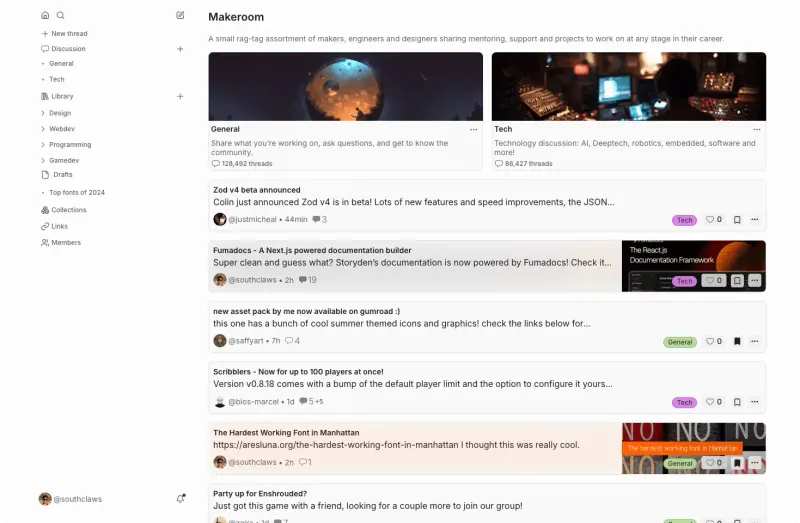
Storyden Clubs, hobby groups and creator communities that want a forum and a shared knowledge base in one place Code Open source Easy
Lemmy Clubs, projects and interest groups that want a Reddit-style community with voting on their own domain Code Open source Some setup
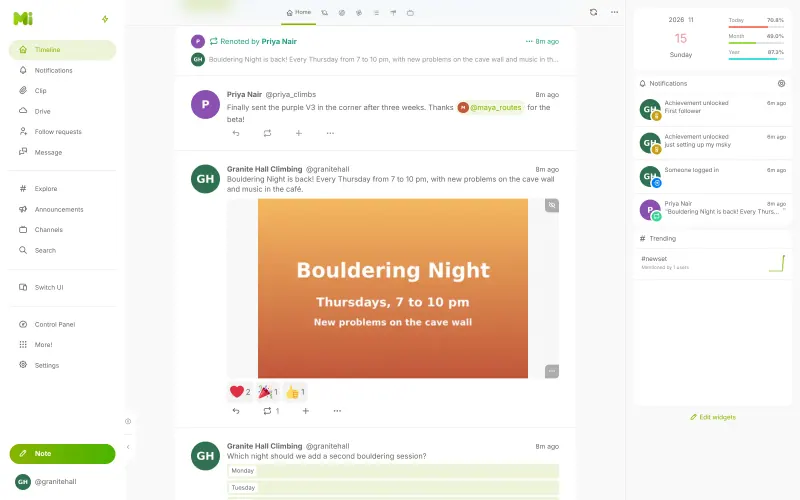
Misskey Clubs, fan communities and creators who want a lively social network of their own, linked to the fediverse Code Open source Some setup
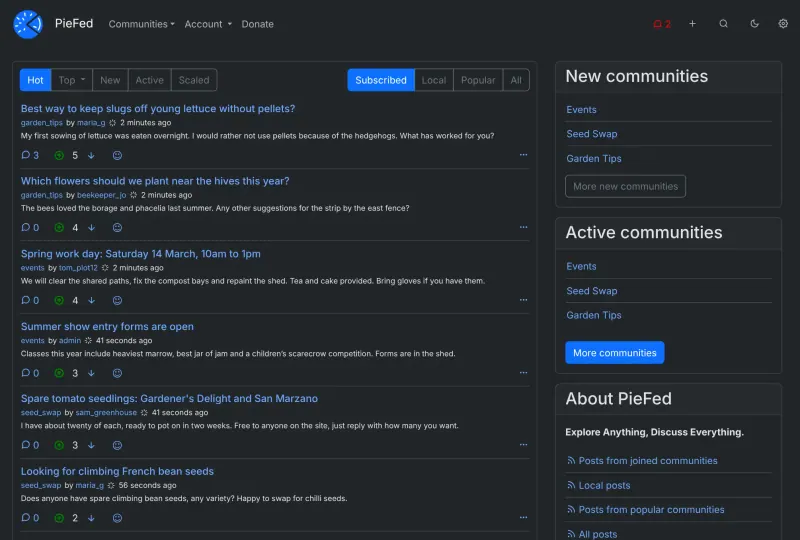
PieFed Clubs, projects and interest groups that want a Reddit-style forum, with some communities kept members-only Code Open source Some setup
Sharkey Communities and creators who want a playful fediverse server that also works with Mastodon apps Code Open source Some setup
HumHub Companies, associations, schools and clubs that want a private social network on their own server Code Open source Some setup
phpBB Clubs, societies and support communities that want a classic, proven forum with no licence fee Code Open source Some setup
Didacta Trainers and small academies selling courses and memberships with a community, happy to use beta software Code Fair-code Some setup

Why look for an alternative to Circle?

Circle is a hosted community platform that combines discussion spaces with courses, events, live streams, paid memberships and branded phone apps.

People look for an alternative because Circle is a monthly subscription plus a fee on payments. When we checked its pricing page in November 2026, plans started at $89 a month, billed yearly, with a 2% transaction fee, and the Business plan cost $199 a month. Communities that mainly need discussion often want their own forum on their own domain, with members and posts under their control. NodeBB is free forum software with real-time replies and chat, and HumHub is a free social network with spaces, feeds and phone apps; Lemmy is a free Reddit-style community with voting, phpBB is a free classic bulletin board, and Misskey is a free social feed with channels and emoji reactions that can connect to the fediverse. Sharkey, built on Misskey, adds sign-up approval and works with Mastodon phone apps. Storyden pairs a forum with a wiki-style knowledge base, and PieFed is a Reddit-style community that can keep single communities private. None of them charges per member. Didacta, a fair-code learning platform in early beta, adds courses and paid memberships to a member community.

The alternatives, compared

NodeBB

Our pick

Forum software for your community, with live chat.

A fast, modern forum: categories, topics, tags, voting, real-time updates, member chat, and groups with fine-grained permissions, with optional sharing to the fediverse. It has no built-in courses, events, live streams or paid memberships, and no native phone app, though it works well in a phone's browser.

What you gain
  • No monthly fee per plan and no transaction fees; you pay only for your server
  • Your members, posts and data stay on your own server and domain
  • Live updates, chat and fediverse sharing built in
What is different
  • NodeBB is a discussion forum; there are no built-in courses, events or paid memberships
  • No native phone apps; members use the forum in their phone's browser
  • Extra features such as single sign-on come from plugins
Some setup Open source

A self-hosted forum and community knowledge base in one place.

Puts a discussion forum and a community knowledge base side by side: threads with replies, tags and reactions, next to a Library of wiki-style pages that members can suggest changes to, plus shared links and collections, with roles, badges and custom themes. It is young software with no courses, events, paid memberships or native phone apps, and no chat.

What you gain
  • No subscription or licence fee; you pay only for your server
  • Your forum and its knowledge base live side by side on your own domain
  • Your members, posts and pages stay on your own server
What is different
  • It is a forum and knowledge base; there are no courses, events pages or paid memberships
  • No phone apps; members use it in their phone's browser
  • There is no tool to import a community from Circle, XenForo or Invision Community
Easy Open source

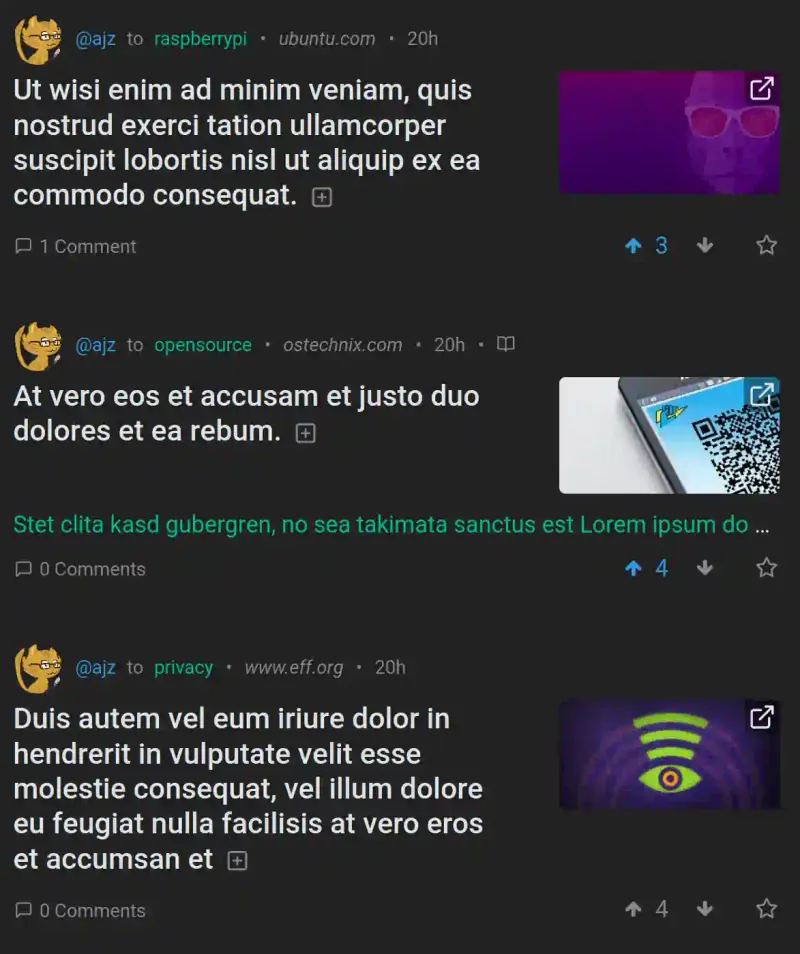
Reddit-style communities with voting and threaded comments.

A Reddit-style alternative: members subscribe to communities, post links, text and images, vote posts up or down and reply in threaded comments, with moderators per community and a public moderation log. It can connect to other Lemmy servers, or stay to itself. Like the others, it has no courses, events or paid memberships, and in this version a community can only be members-only by making the whole site private.

Some setup Open source

Your own social network in the fediverse.

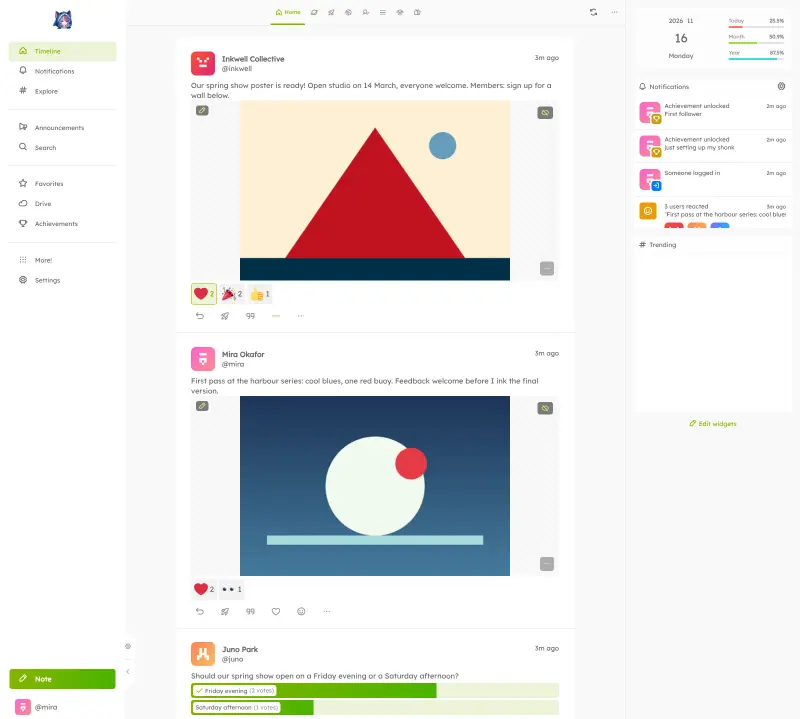
For a community that feels more like a social feed than a forum: members post short notes with pictures and polls, react with emoji, gather in channels by topic, and get roles and badges, with sign-ups open, by invite or by approval. It can also connect to the fediverse. It is a timeline, not a forum with threads, and like the others it has no courses, events or paid memberships, and no official phone apps.

Some setup Open source

Reddit-style forum with public and private communities.

A Reddit-style community like Lemmy, with communities, votes and threaded comments, plus polls, events, community wikis, flairs and built-in private chat. Unlike Lemmy, a single community can be made private, with members joining by invitation, inside an otherwise public site. It can connect to Lemmy and the wider fediverse, and like the others it has no courses or paid memberships.

Some setup Open source

A Misskey-based social network that works with Mastodon apps.

A social feed for your community, built on Misskey: short notes with pictures and polls, emoji reactions, channels by topic and roles, with sign-ups that wait for a moderator's approval and a reason for joining, and Mastodon apps on phones. It is a timeline rather than a forum, and like the others it has no courses, events or paid memberships.

Some setup Open source

A self-hosted social intranet with spaces, news feeds and profiles.

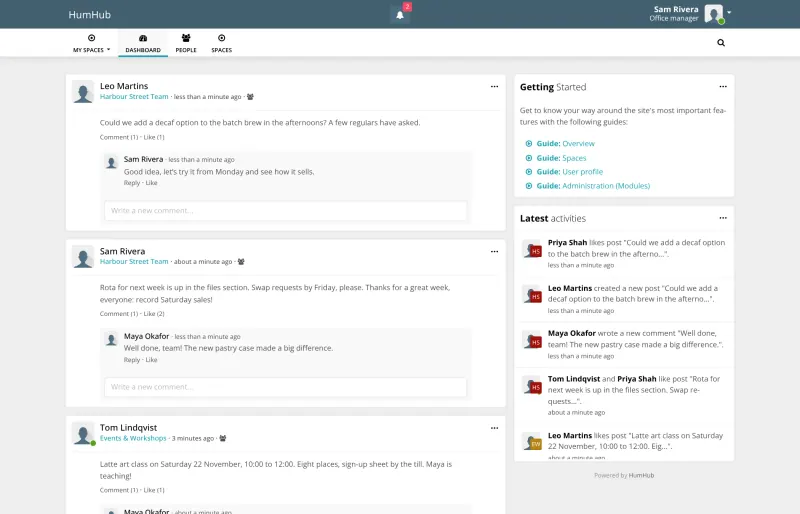
The closer match if your Circle community is more social network than forum: spaces with their own feeds, member profiles and a people directory, notifications and free phone apps for iPhone and Android. Like NodeBB, it has no courses or paid memberships, and some premium modules and single sign-on need HumHub's paid Professional Edition.

Some setup Open source

Classic self-hosted forum software for clubs and communities.

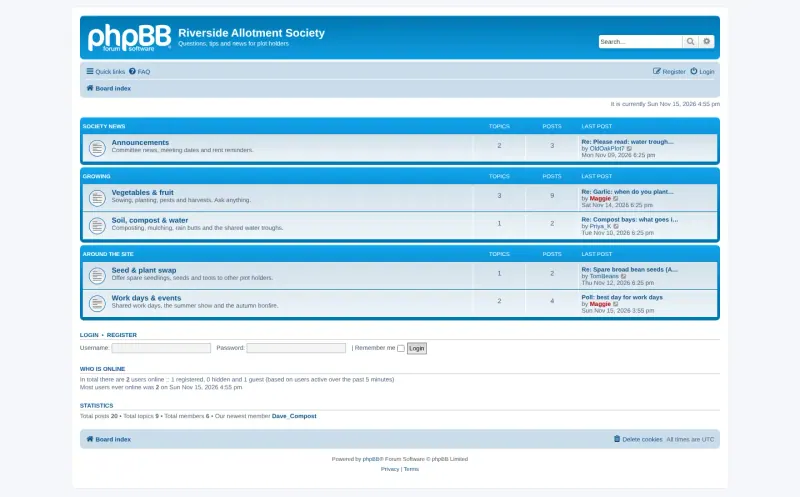
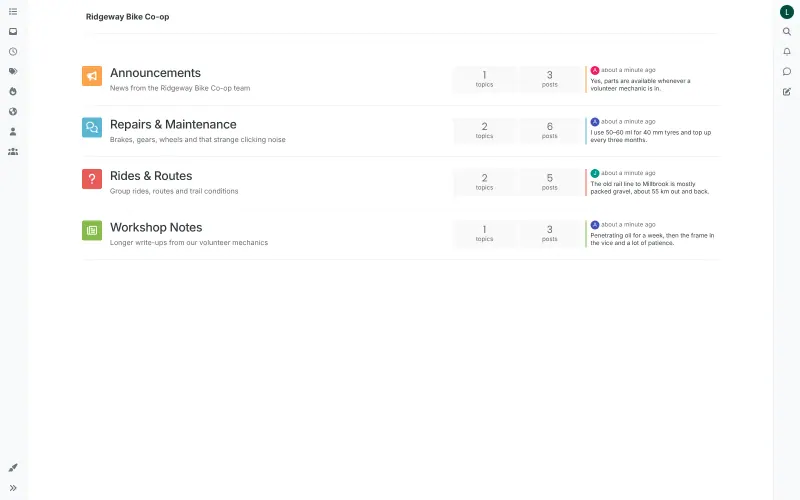
A classic, long-proven bulletin board: categories and forums, topics, private messages, polls, attachments, moderation tools and detailed permissions by group and forum, with a large library of free extensions and styles. Pages load one at a time, with no live updates, chat or fediverse link, and like the others it has no courses, events or paid memberships.

Some setup Open source

Sell courses and memberships, with a community, on your own server.

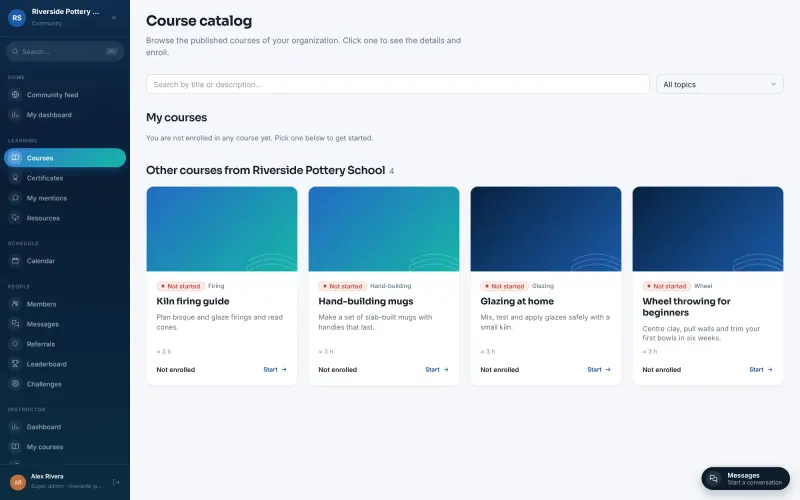
The one app here with courses and paid memberships next to the community, like Circle: a community feed with posts, threads, reactions and mentions, member messaging, points, streaks and badges, live classes through Zoom, and courses or memberships sold through your own Stripe account. It is a learning platform first, fair-code rather than open source and still in early beta, with no mobile app.

Some setup Fair-code

Moving from Circle

None of these apps imports from Circle, so you start fresh. In NodeBB, recreate your spaces as categories, set up groups and permissions for your member levels, and add your email server so members can confirm their address and get notifications. Then invite your members with a link to the new forum. In HumHub, recreate your spaces as HumHub spaces, add your email server, and invite members by email or with an invite link. In Lemmy, choose your final web address first, because it cannot change later, then create a community for each Circle space, set sign-ups to open, by application or closed, and add your email server.

In phpBB, recreate your spaces as forums inside categories, set group permissions for your member levels, turn on an anti-spam question and add your email server in the admin panel, then share the board's address. In Misskey, choose the final address first, because it can't change after the first start, create a channel for each Circle space, set sign-ups to invite-only in the Control Panel, and add your email server so members can confirm their address. Sharkey sets up like Misskey: create a channel for each Circle space, require approval for sign-ups so new members give a reason for joining, and add your email server.

In Storyden, register your own account straight after install, because the first account becomes the admin, then create a category for each Circle space, move your guides and resources into Library pages, and add your email server if you want email sign-in. In PieFed, sign in with the admin user Cloudgate created, create a community for each Circle space, mark any members-only ones as private, choose open, application or closed sign-ups, and add your email server.

In Didacta, turn on the community module during the first-run setup, which is in Spanish, rebuild your courses in the course editor, connect your Stripe account and set up memberships for paid access, and add your email server so invitations reach members. Then invite your members or share the sign-up page.

Whichever you choose, post a note in Circle pointing to the new address, and keep the Circle community readable for a while so people can still find past discussions.

Questions

What is the best self-hosted alternative to Circle?

Start with NodeBB. If you want something simpler, try Storyden. All 9 are free to self-host. NodeBB, Storyden, Lemmy, Misskey, PieFed, Sharkey, HumHub and phpBB are open source; Didacta (fair-code) publishes its code under a licence with conditions an open-source licence does not have, such as limits on reselling it, keeping the maker's branding or a paid key for some features.

Can NodeBB, HumHub, Lemmy, phpBB, Misskey, Sharkey, Storyden or PieFed sell memberships or courses like Circle?

No. NodeBB and phpBB are discussion forums, HumHub is a social network, Lemmy and PieFed are Reddit-style link and discussion sites, Misskey and Sharkey are social timelines and Storyden is a forum with a knowledge base; none has built-in courses or paid memberships. Use separate tools for those and link to them from your community, or choose Didacta.

Is there a self-hosted Circle alternative with courses and paid memberships?

Yes, Didacta. It combines a member community with courses, memberships sold through your own Stripe account, messaging, gamification and live classes through Zoom. It is fair-code rather than open source and still in early beta, so test it before you move a paying community.

Should I choose NodeBB or HumHub?

NodeBB if your community mostly asks and answers questions in topics, with real-time replies and chat. HumHub if members mainly follow spaces and a news feed, and you want native phone apps.

When is Lemmy a better choice than NodeBB?

When your members mostly share links and vote on the best posts and replies, like on Reddit, rather than hold long topic threads. Lemmy is also the one to pick if you want your community linked with other Lemmy servers.

Should I choose NodeBB or phpBB?

NodeBB if you want a modern forum where replies appear live and members can chat. phpBB if you want a classic, well-proven bulletin board that is light to run, with a large library of extensions and styles.

Should I choose NodeBB or Discourse?

Both are open-source forums. NodeBB is built on Node.js, shows replies in real time, has chat built in and connects to the fediverse. Discourse is another popular open-source forum; it is not in this catalogue.

Can people on Mastodon see my NodeBB forum?

Yes, by default. NodeBB shares public categories with the fediverse, so people on Mastodon and similar networks can follow and reply. Turn federation off in the admin settings if you want the forum kept to itself.

When is Misskey a better choice than HumHub?

When your members mostly chat in short posts and react with emoji, like on a social network, and you want them able to follow people on Mastodon. Choose HumHub for spaces with their own feeds and free official phone apps.

When is Storyden a better choice than NodeBB?

When your community collects knowledge as well as discussing it, such as guides, directories or a wiki, and you want those pages next to the forum. NodeBB is the more mature forum, with real-time replies and chat.

Should I choose Lemmy or PieFed?

Both are Reddit-style communities that connect with each other. PieFed adds private, invite-only communities, polls, events and community wikis; Lemmy has more phone apps made for it.

Are these Circle alternatives really free?

NodeBB, HumHub, Lemmy, phpBB, Misskey, Sharkey, Storyden and PieFed are free and open source. Didacta is free to self-host under its fair-code Sustainable Use License to run your own academy, including selling your courses through your own Stripe account; hosting it as a paid service for other people needs an agreement with its makers, and single sign-on and white-label need its paid Enterprise licence. To run them you need Cloudgate and a server: use hosted Cloudgate, which can also provide the server, or install Cloudgate on a server of your own for free. Cloudgate's plans and prices are at cloudgate.octabyte.io/pricing.

Do I need a developer to replace Circle?

No. Cloudgate installs the app you choose on your server and gives it a secure web address, and you use it in your browser instead of Circle.