


S

Open-source alternatives to Sortly

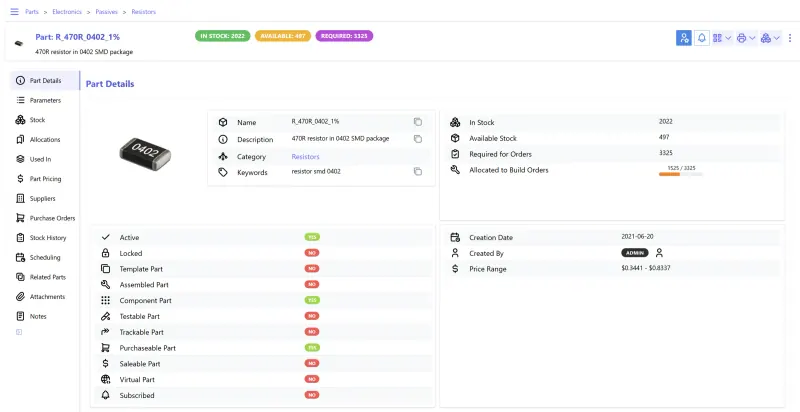
InvenTree is a free, open-source Sortly alternative for tracking parts and stock by location, with barcodes, suppliers, bills of materials and build orders, and HomeBox is the simpler choice for household and office belongings. Sortly’s plans are priced by the number of items and users; self-hosted apps have no item or user limit, though InvenTree looks more like an engineering tool than a phone app.

5 alternatives Free apps Our pick: InvenTree

At a glance

App Good for Code Import from Sortly Ease of use
InvenTree Small manufacturers, electronics labs, makerspaces and hobbyists who track parts, bills of materials and builds Code Open source Import from Sortly Partly Easy
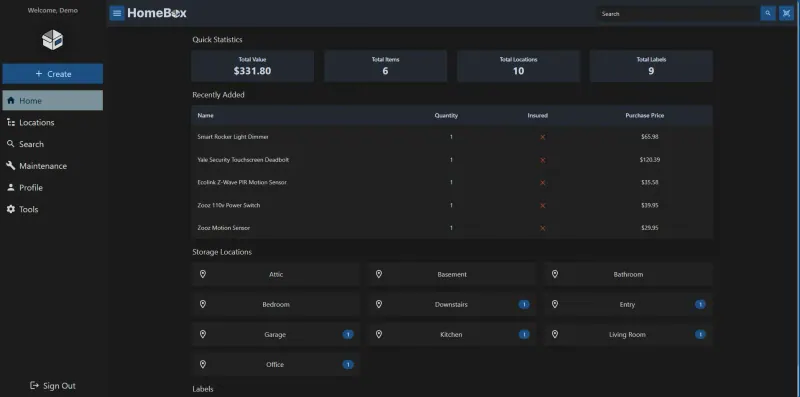
HomeBox Households and small offices recording belongings, warranties and receipts Code Open source Import from Sortly Partly Easy
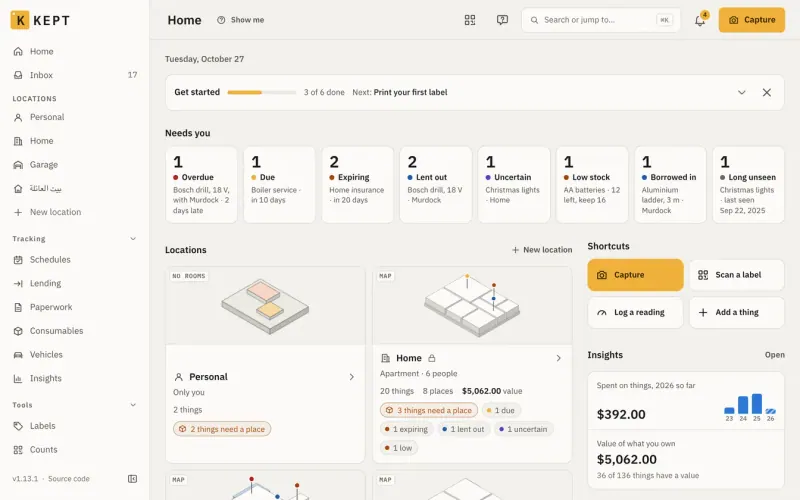
Kept Households and small teams tracking belongings, stock that runs low, loans and where everything is kept Code Open source Import from Sortly Partly Easy
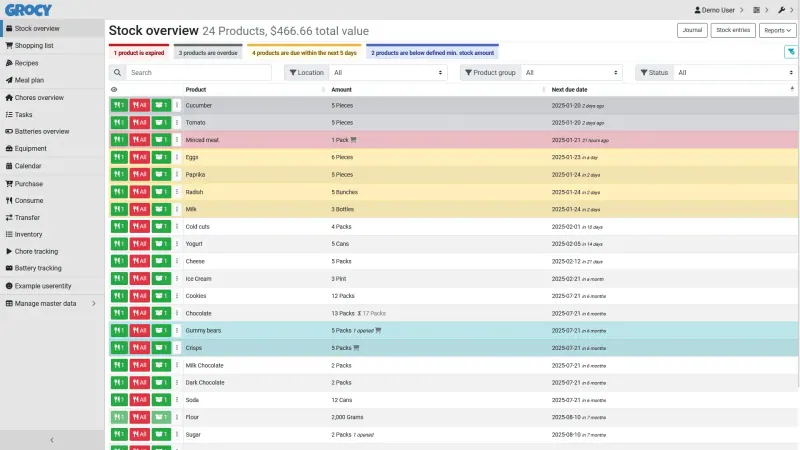
Grocy Households who want to track food at home, waste less and share shopping lists and chores Code Open source Import from Sortly No Some setup
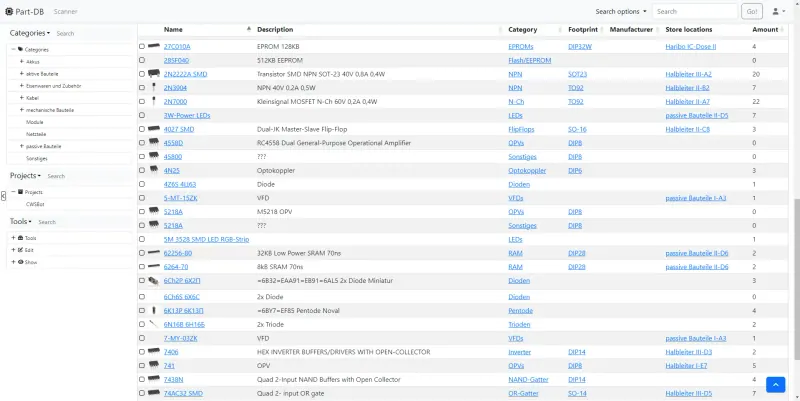
Part-DB Electronics workshops, repair shops, makerspaces and labs that keep a stock of components Code Open source Import from Sortly Partly Easy

Why look for an alternative to Sortly?

Sortly is a hosted inventory app for small businesses, built around its phone app: you photograph items, put them in folders and scan barcodes to count and move stock.

People look for an alternative because Sortly's price grows with your inventory. When we checked Sortly's pricing page in November 2026, the free plan stopped at 100 items and one user, and paid plans were priced by the number of items and users, with lower prices only for the first year. A self-hosted InvenTree has no item or user limit and no subscription, and it adds suppliers, orders and bills of materials for workshops and small manufacturers. For belongings at home or in a small office, HomeBox is the simpler, lighter choice, Kept adds QR labels, lending and low-stock alerts, and Grocy tracks food and household goods with due dates and a shopping list. For a stock of electronic components, Part-DB adds footprints, datasheets and KiCad integration.

The alternatives, compared

InvenTree

Our pick

Track parts, stock, suppliers and builds for your workshop.

Tracks items in nested locations such as rooms, shelves and bins, with barcodes, serial numbers, batch codes and a full history of every change, and goes further than Sortly with suppliers, purchase and sales orders, bills of materials and build orders. It has no item or user limit. It looks like an engineering tool rather than a polished consumer app, and its phone app is a companion that does not do everything the website does.

What you gain
  • No limit on items or users, and no subscription
  • Bills of materials, build orders, and purchase and sales orders, all free
  • Your stock and supplier records stay on your own server
What is different
  • It looks and feels like an engineering tool, not a polished consumer app
  • There is no Sortly importer; you move your items over as a CSV file
  • The phone app is a companion to the website and does not do everything the website does
Easy Open source

Know what you own, where it is, and when its warranty ends.

A simple inventory for homes and small offices: items in nested rooms, shelves and boxes, with photos, serial numbers, purchase price, warranty details, receipts and manuals, plus QR code labels and maintenance reminders. It is very light to run and has no item or user limit. It has no phone app, scanning works through the phone's browser, and it is not built for business stock with suppliers or purchase orders.

What you gain
  • No limit on items or users, and no subscription
  • Your photos, receipts and values stay on your own server
  • No app or company that can close your inventory, as Encircle closed its free home inventory app
What is different
  • No phone app; you use it in your phone's browser
  • Photos and documents are not part of the spreadsheet export
  • Built for belongings, not for business stock with suppliers and reorder levels
Easy Open source

Inventory of what you own, where it is and who has it.

Between InvenTree and HomeBox: belongings and household stock in nested places, with photos, receipts, warranties, QR labels, counts and stocktakes, low-stock alerts, lending and reminders, and a phone web app that works offline. No plan limits its items or users. It has no app-store apps, no Sortly importer, and no suppliers, purchase orders or sales.

What you gain
  • No limit on items or users set by a plan, and no subscription
  • QR labels, stocktakes, low-stock reminders and lending, all free
  • Works offline on a phone, and your photos and receipts stay on your own server
What is different
  • No App Store or Google Play app; you install it from the phone's browser
  • There is no Sortly importer; you bring items over in a spreadsheet (CSV)
  • Made for belongings and household or office stock, not for purchase orders, suppliers or sales
Easy Open source

Groceries, pantry stock, shopping lists and chores.

The better fit if your inventory is a household's: it tracks food and household goods by storage place, with amounts and due dates, scans barcodes in the browser, fills a shopping list from minimum stock, and adds recipes, a meal plan, chores and equipment. It is not built for business stock, with no suppliers or orders, and its phone apps are made by its community.

Some setup Open source

Track electronic parts, where they are stored and what they cost.

The choice for an electronics workshop or lab: parts with footprints, manufacturers, datasheets and prices, parametric search, barcode labels scanned with a phone's camera in the browser, projects with bills of materials and KiCad integration, with no item or user limit. It is built for electronic components, so it does not suit general business or household stock, and it has no phone app; it works in the phone's browser.

Easy Open source

Moving from Sortly

There is no Sortly importer, so move your items as a CSV file. Export your inventory from Sortly, then set up your locations and part categories in InvenTree first, so imported items have somewhere to go. Import parts and stock through InvenTree's data import, which lets you match the CSV columns to InvenTree's fields, and check a few items before importing everything. Photos and history do not come across. Install the InvenTree app on your phone to scan barcodes and move stock. HomeBox also imports items, locations and labels from a CSV file, but in its own column names, so rearrange Sortly's export to match HomeBox's import format first; photos and attachments are not part of the import. Grocy has no CSV importer, so for a home inventory add your storage places and products by hand or by scanning barcodes, then record what you have as your first stock. Kept imports a CSV file too: rearrange Sortly's export into Kept's import columns, such as name, quantity, place, serial number, barcode, price and tags, then print QR labels for your boxes and shelves. Part-DB imports parts from CSV, JSON, YAML, XML and Excel files, so export your electronic parts from Sortly, set up categories, footprints and storage locations in Part-DB first, then import the file and check a few parts.

Questions

What is the best open-source alternative to Sortly?

Start with InvenTree. All 5 are free and open source.

Is there a self-hosted Sortly alternative for a home inventory?

Yes, three. HomeBox records the belongings of a home, with warranties, receipts and values. Kept does the same with QR labels, low-stock alerts, lending and offline use on a phone. Grocy tracks what is in the fridge, freezer and cupboards and when it is due, and builds the shopping list from it. InvenTree suits a workshop or small business better.

Which Sortly alternative suits electronic components?

Part-DB. It is built for electronic parts, with footprints, datasheets, parametric search, distributor lookups and KiCad integration. InvenTree also handles electronic parts well, and adds suppliers, purchase and sales orders and build orders for a small manufacturer.

Is InvenTree harder to use than Sortly?

Yes, at first. InvenTree has more features, such as parts, suppliers, orders and builds, and its screens are dense. Sortly is simpler and made for phones first. If you only count items in a few places, expect some setup time in InvenTree.

Does InvenTree have a phone app with barcode scanning?

Yes. The free InvenTree app for Android and iPhone scans barcodes and moves stock. It is a companion to the website and does not do everything the website does.

Should I choose InvenTree or HomeBox?

Choose InvenTree for business stock: parts, suppliers, purchase and sales orders, and builds. Choose HomeBox to record the belongings of a home or small office, with warranties, receipts and values, for insurance or to find things.

Can InvenTree do invoicing or accounting?

No. InvenTree handles stock, purchase orders and sales orders, but it has no invoicing, accounting or point of sale. Use a separate accounting app for those.

Are these Sortly alternatives really free?

Yes, InvenTree, HomeBox, Kept, Grocy and Part-DB are free. To run them you need Cloudgate and a server. Use hosted Cloudgate, which can also provide the server, or install Cloudgate on a server of your own for free. Cloudgate's plans and prices are at cloudgate.octabyte.io/pricing. One server can run several apps.

Do I need a developer to replace Sortly?

No. Cloudgate installs the app you choose on your server and gives it a secure web address, and you use it in your browser instead of Sortly.