
A

Open-source alternatives to Ancestry

Gramps Web is a free, open-source Ancestry alternative for keeping your family tree, photos, sources and DNA match data on your own server and building it together with relatives. Ancestry is a subscription service whose main draw is its historical record collections and record hints; Gramps Web and webtrees have no subscription and import your Ancestry tree as a GEDCOM file, but have no record collections or DNA tests.

2 alternatives Free apps Our pick: Gramps Web

At a glance

App Good for Code Import from Ancestry Ease of use
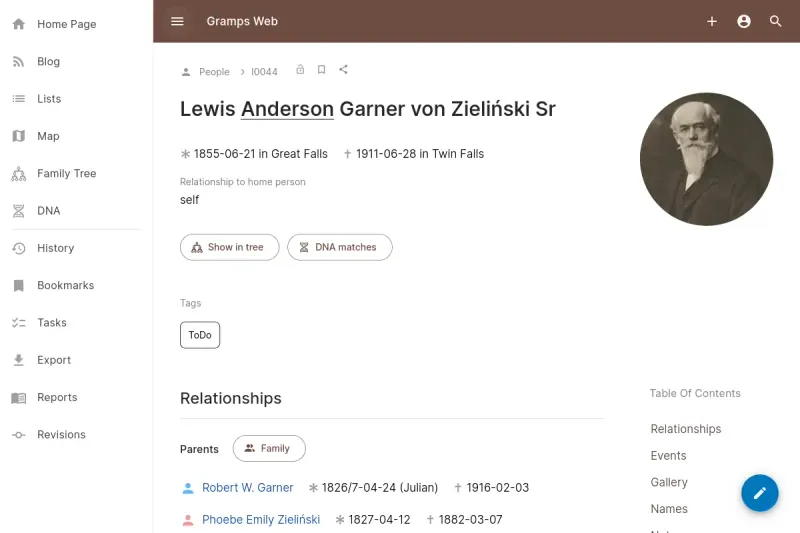
Gramps Web Families and genealogy hobbyists who want a shared family tree kept private Code Open source Import from Ancestry Partly Some setup
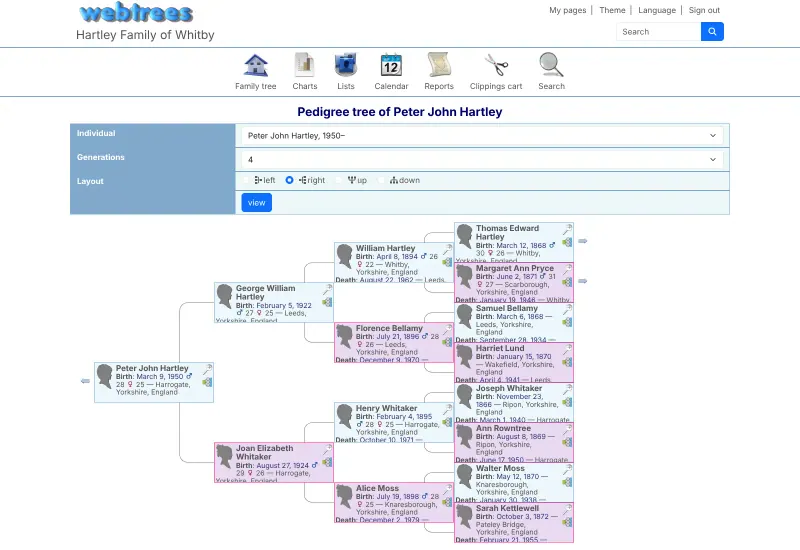
webtrees Families, family historians and genealogy societies who want their own family history website Code Open source Import from Ancestry Partly Some setup

Why look for an alternative to Ancestry?

Ancestry is a subscription genealogy service: people build family trees on it, search its historical record collections, get record hints, and take its DNA tests.

People look for an alternative when they want to keep their tree, photos and family stories without a subscription, or want their family's data on their own server rather than a genealogy company's. A self-hosted Gramps Web keeps the tree private to the relatives you invite; in return, it has no record collections or DNA tests, so you bring your own research. webtrees, the other self-hosted option, publishes the tree as a family history website, private or public, with privacy settings for each person and fact.

The alternatives, compared

Gramps Web

Our pick

A self-hosted family tree you build and share with your relatives.

Keeps your family tree, photos, sources and DNA match data on your own server, with charts, maps and timelines, and lets relatives view or edit it with their own sign-in. It has no historical record collections, record hints or DNA tests, though a person's page can open a ready-made search on Ancestry or FamilySearch.

What you gain
  • No subscription to keep your tree, photos and notes online
  • Your family's data stays on your own server, not on a genealogy company's
  • Download everything, including photos and user accounts, at any time
What is different
  • No historical record collections, record hints or DNA tests; you bring your own research
  • Photos don't travel in a GEDCOM file, so you upload them separately
  • The tree is for signed-in relatives, not a public family website
Some setup Open source

A family tree website you build with relatives, public or private.

Puts your family tree on a family history website of your own, private or open to visitors, where relatives with accounts build it together and you decide, person by person and fact by fact, who sees what. It has many charts, PDF reports, maps and over 60 languages. It has no record collections, record hints, DNA tests or DNA tools, and no official phone app.

What you gain
  • No subscription to keep your family tree online
  • Your family's data stays on your own server, under privacy rules you set
  • A family history website you can open to the public or keep for signed-in relatives
What is different
  • No historical record collections, record hints or DNA tests; you bring your own research
  • Photos don't come across in a GEDCOM file, so you upload them separately
  • No phone app; it works in the browser on any phone
Some setup Open source

Moving from Ancestry

In Ancestry, open Tree Settings and choose Export Tree to download a GEDCOM file. In Gramps Web, import it: you see how many people and families it found before anything is added, and lines it does not recognise are kept as notes. Photos and documents are not inside a GEDCOM file, so download the ones you want from Ancestry and upload them to Gramps Web, then tag the people in them. Invite your relatives with the roles they need. With webtrees, import the same GEDCOM file from Manage family trees in its control panel, attach the photos and documents you downloaded to people and events, and check the privacy settings before you invite relatives or open the site to visitors. Keep your Ancestry account if you still want its record search.

Questions

What is the best open-source alternative to Ancestry?

Start with Gramps Web. Both are free and open source.

Can I keep using Ancestry's records with Gramps Web?

Yes, alongside it. Gramps Web has no record collections of its own, but a person's page can open a ready-made search on Ancestry or FamilySearch.

Can I bring my Ancestry DNA matches?

Yes, into Gramps Web, if you have the match data. Upload DNA match data from your testing company and explore it in Gramps Web's chromosome browser on your own server. webtrees has no DNA tools.

Should I choose Gramps Web or webtrees?

Gramps Web for a private tree that invited relatives work on together, with DNA match tools and a link to the Gramps desktop program. webtrees for a family history website that can be private or public, with privacy settings for each person and fact, many charts and PDF reports, and over 60 languages.

Are these Ancestry alternatives really free?

Yes, Gramps Web and webtrees are free. To run them you need Cloudgate and a server. Use hosted Cloudgate, which can also provide the server, or install Cloudgate on a server of your own for free. Cloudgate's plans and prices are at cloudgate.octabyte.io/pricing. One server can run several apps.

Do I need a developer to replace Ancestry?

No. Cloudgate installs the app you choose on your server and gives it a secure web address, and you use it in your browser instead of Ancestry.