
OpenCloud
File sync and sharing, with shared drives for each team.
No server needed to start: Cloudgate can provide one. What happens when you click Deploy




What is OpenCloud?
OpenCloud is self-hosted file sync and sharing with team Spaces, desktop and phone apps, and secure share links, replacing Dropbox or Google Drive.
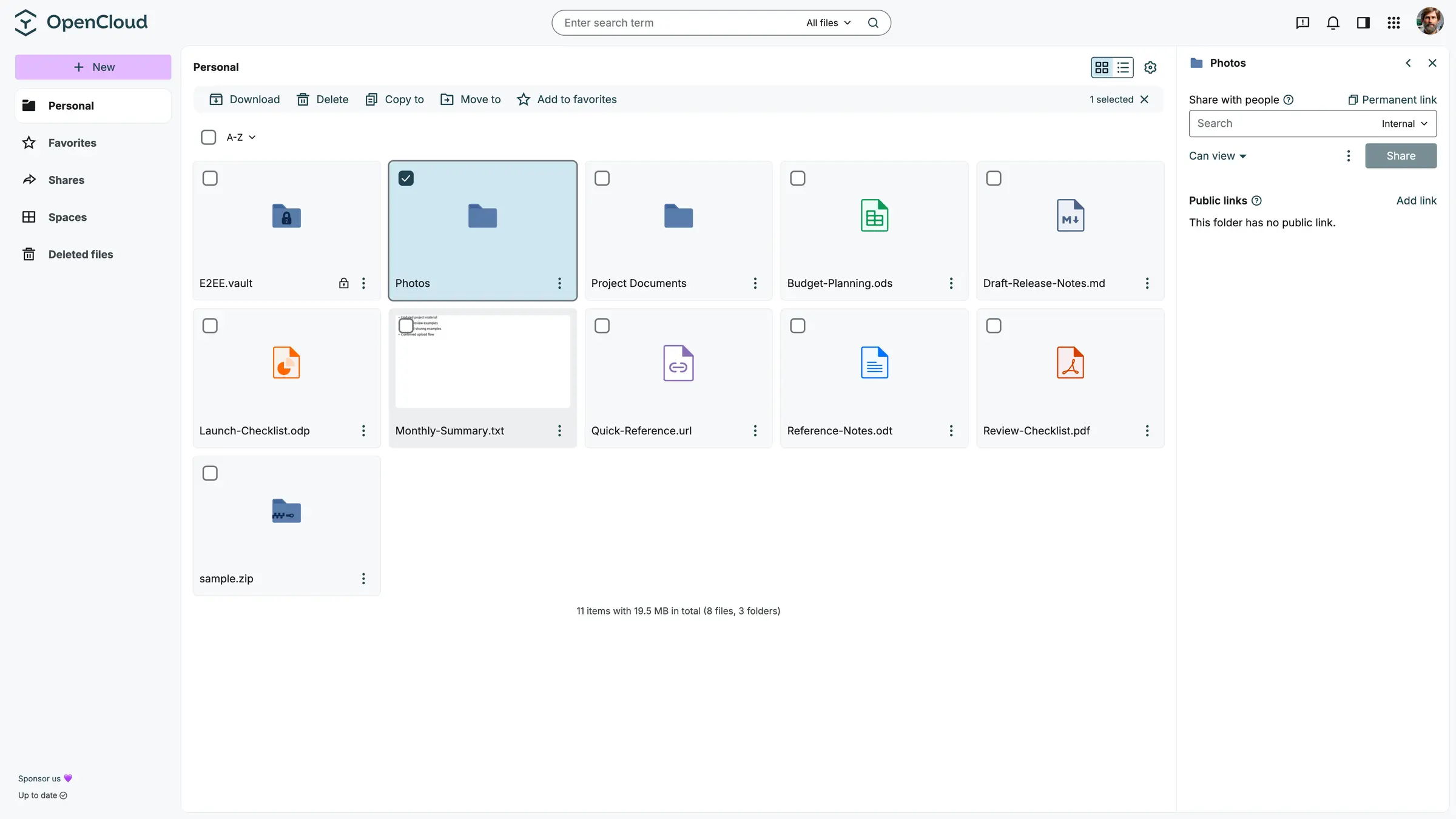
OpenCloud is open-source, self-hosted file sync and sharing software: it keeps your team's files in step across computers and phones and lets you share them by link, much like Dropbox, Google Drive, Box or OneDrive, but on your own server. It is a continuation of ownCloud Infinite Scale, built by former ownCloud developers at OpenCloud GmbH in Berlin.
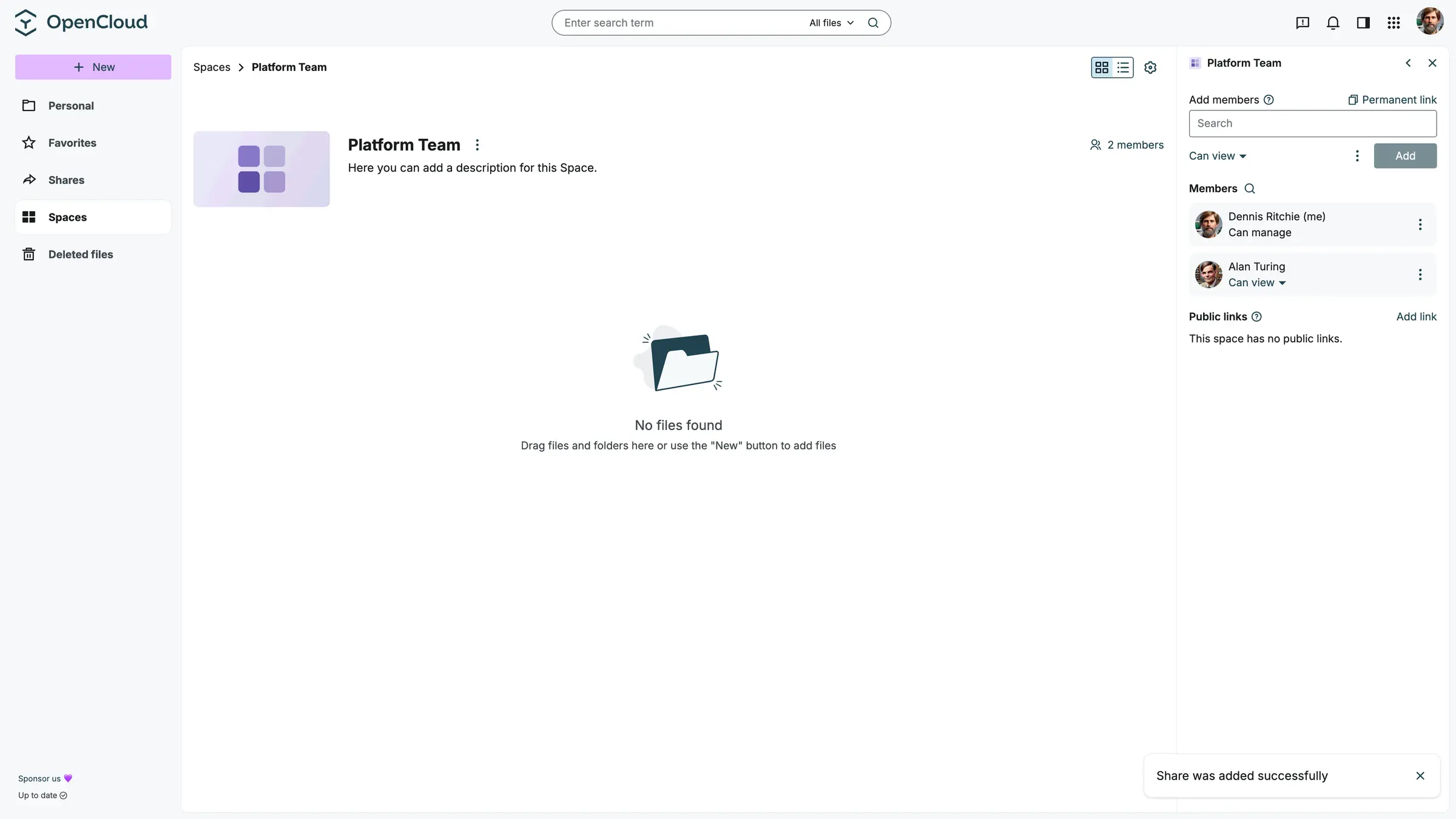
Its main idea is Spaces: shared drives for a team or a project, where files belong to the Space rather than to one person, so nothing is lost when someone leaves. A small architecture firm, for example, could open a Space for each client project, give the whole team edit rights, and send the client a file-drop link to upload their site photos.
Share links can carry a password and an expiry date, every file keeps its earlier versions, and deleted files can be brought back. There are desktop apps for Windows, Mac and Linux and apps for iPhone and Android.
Cloudgate installs OpenCloud on a server Cloudgate provides or one you connect and gives it a secure web address. It needs no database and runs on a small server. Office editing in the browser and searching inside documents are not included. Plan your disk: your storage is the size of your server's disk.
What you can do with OpenCloud
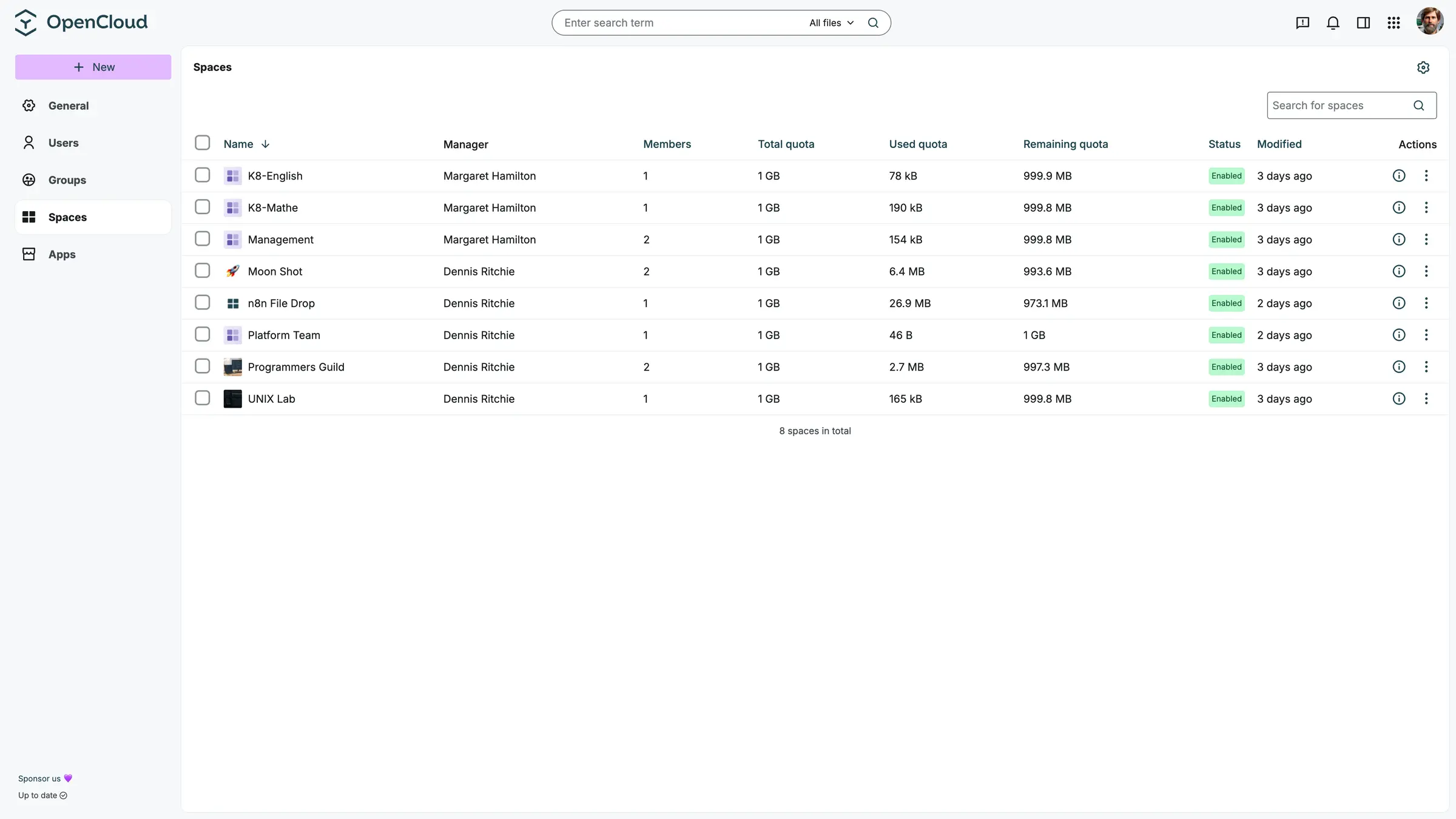
- Keep team files in Spaces A Space is a shared drive for a team or project, and its files belong to the Space, so they stay when someone leaves.
- Choose who can do what Add people to a Space as viewers, editors or managers, and give each Space its own storage limit.
- Sync files on every computer Desktop apps for Windows, Mac and Linux keep files up to date and can show them without downloading everything.
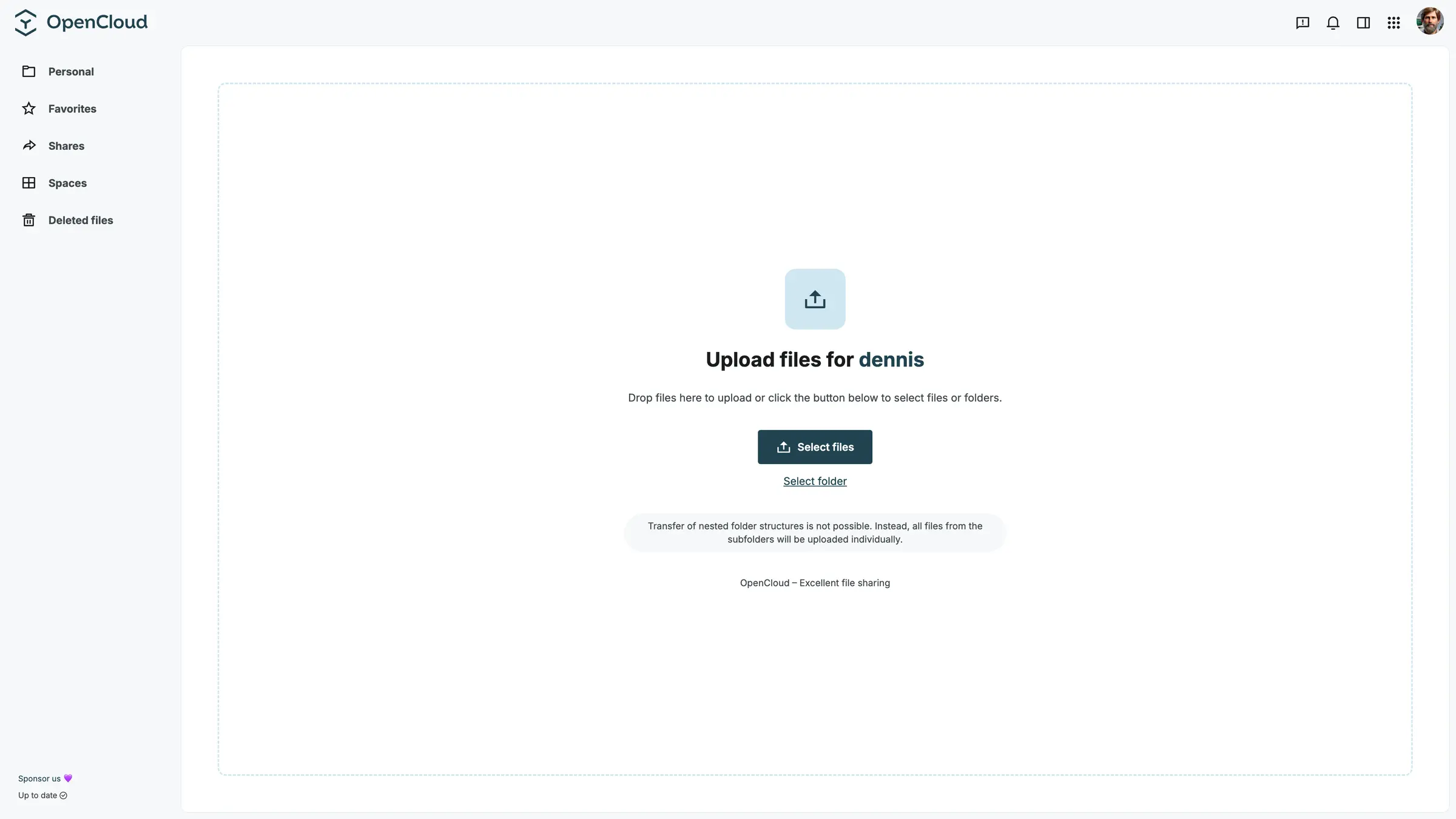
- Share with a secure link Send a link with a password and an expiry date, or a file-drop link that lets clients upload files to you.
- Share with colleagues Share a file or folder with a person or a group and choose whether they can view, edit or upload.
- Go back to an earlier version Restore an older version of a file, or bring back a deleted one from Deleted files.
- Reach files from your phone Apps for iPhone and Android open your files on the go.
Replaces Dropbox, Google Drive, Box and OneDrive
OpenCloud does the same job as Dropbox, Google Drive, Box and OneDrive. Here is what changes when you switch.
- No price per user, and no storage plan to upgrade
- Your files stay on a server you control
- Team files live in shared Spaces instead of one person's account
- Runs on a small server, with no database to look after
- This template has no editor for office documents in the browser
- Search finds files by name, tags and type, not by the words inside them
- There is no importer, so you move files across by copying them
- Your storage is the size of your server's disk, and backups are your job, with Cloudgate's help
What happens when you click Deploy?
You do not need a server or any technical knowledge. Four steps, and OpenCloud is running at its own web address.
- Step 1 Click Deploy and create your account
Deploy takes you to Cloudgate. Create an account, or log in if you have one. OpenCloud itself is free.
- Step 2 Choose a server
No server? Get one from Cloudgate: pick a size and a country, and Cloudgate gets it ready. Already have one? Connect it instead.
- Step 3 Cloudgate sets up OpenCloud
It prepares the server, makes the passwords the app needs and starts it. There is nothing to install and nothing to write down.
- Step 4 Open your app and sign in
Your app gets a free web address to start, without https. Add your own domain, like app.yourshop.com, and Cloudgate secures it with https for you.
New to Cloudgate? See what Cloudgate is
Run Cloudgate yourself? Deploy from your own console
In your Cloudgate console, open Templates and choose OpenCloud.
Questions
Is OpenCloud free?
Yes. OpenCloud is free, open-source software (its server is Apache-2.0 and its web app AGPL-3.0), and you pay only for your server. OpenCloud GmbH also sells subscriptions that add professional support, long-term support releases and some compliance features.
Is OpenCloud a good alternative to Dropbox?
Yes. OpenCloud covers what most teams use Dropbox for, with desktop sync, phone apps, share links with passwords and expiry dates, upload links and file versions. It has no office editor in this template, and you look after the server and its disk.
Should I choose OpenCloud or Nextcloud?
Choose OpenCloud if you mainly need fast file sync, sharing and shared team drives on a small server. Choose Nextcloud if you also want calendars, contacts, an office suite and many other apps in the same place.
Is OpenCloud the same as ownCloud?
No. OpenCloud started in January 2025 as a continuation of ownCloud Infinite Scale by former ownCloud developers, and it is now developed separately by OpenCloud GmbH in Berlin.
How do I sign in the first time?
Sign in with the user name admin and the password Cloudgate generated, shown on the app's variables page in Cloudgate. That password is only used on the first start, so change it in OpenCloud afterwards. There is no sign-up page; the admin adds each colleague.
Can I move my files from Dropbox or Google Drive?
Yes, by copying them across. OpenCloud has no importer, so download your files from Dropbox or Google Drive, then drop them into a folder the OpenCloud desktop app syncs, and it uploads them for you. Put files the whole team shares in a Space.
Can I edit documents or search inside them?
No, not in this Cloudgate template. OpenCloud can edit office files in the browser with Collabora and search the text inside files with Apache Tika, but each needs a separate server. File names, tags and file types are still searchable.
Do I need technical skills to run OpenCloud?
No. Click Deploy, create your Cloudgate account and choose a server, and Cloudgate sets up OpenCloud and gives it a web address. You use it in your browser like any other online tool.
Do I need my own server for OpenCloud?
No. When you deploy OpenCloud, hosted Cloudgate can provide a server. If you already rent one, you can connect it instead.
Related apps

Fast, self-hosted file sync and sharing for your team.

File sharing and sync for your team's shared drive.

File sync and sharing, with shared Spaces for each team.
A self-hosted web file manager with a home folder for each person.