




Self-hosted alternatives to Shopify

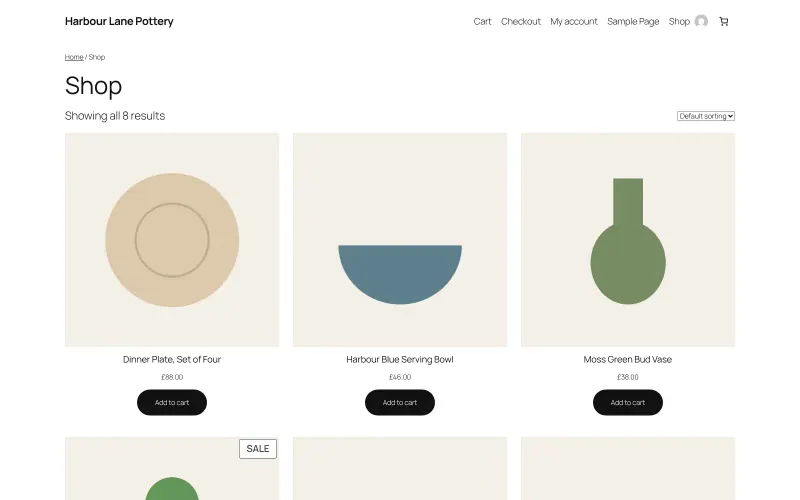
WooCommerce is the free, open-source Shopify alternative we recommend: it turns a WordPress site into a full online shop with products, cart, checkout, orders and stock. Shopify charges a monthly plan and, unless you use Shopify Payments, a fee on every sale; a self-hosted shop pays no platform fee or cut of sales, only your server and your payment provider’s card fees.

7 alternatives Free apps Our pick: WooCommerce

At a glance

App Good for Code Import from Shopify Ease of use
WooCommerce Small businesses that want their own shop on WordPress, with no monthly platform fee or cut of sales Code Open source Import from Shopify Partly Some setup
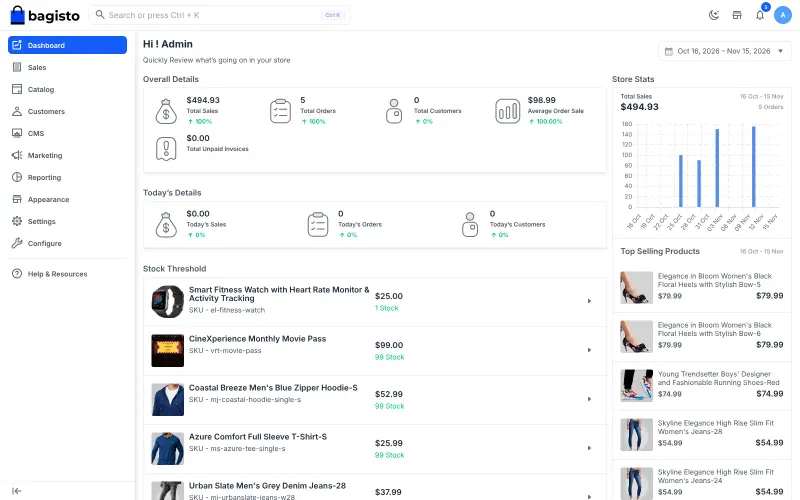
Bagisto Shops and Laravel developers who want an MIT-licensed store with variants, bookings and returns built in Code Open source Import from Shopify Partly Some setup
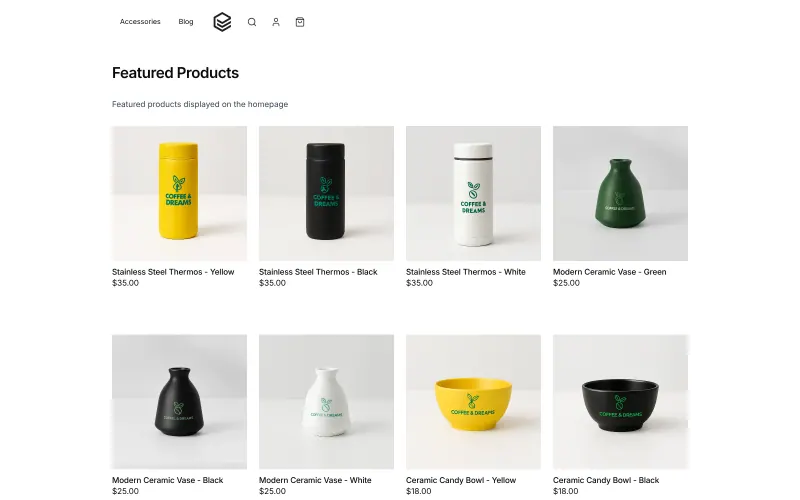
EverShop Developers and small shops that want a modern, lightweight store they can customise in JavaScript Code Open source Import from Shopify Partly Some setup
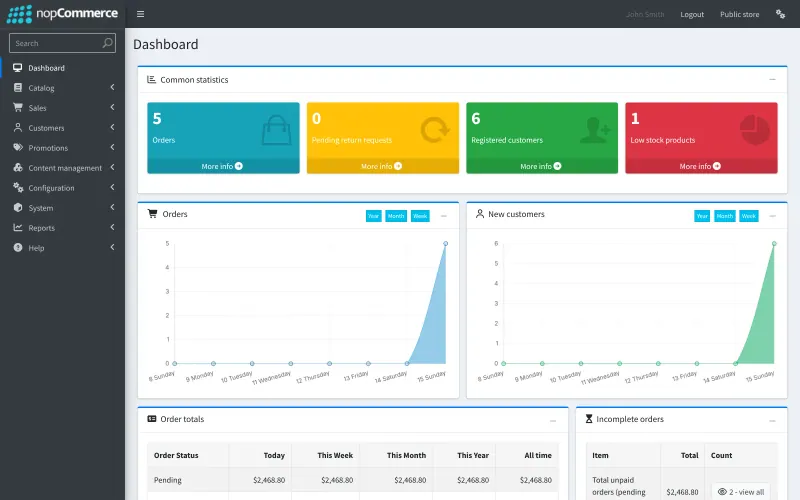
nopCommerce Growing shops, B2B sellers and marketplaces with several stores or vendors Code Source-available Import from Shopify Partly Some setup
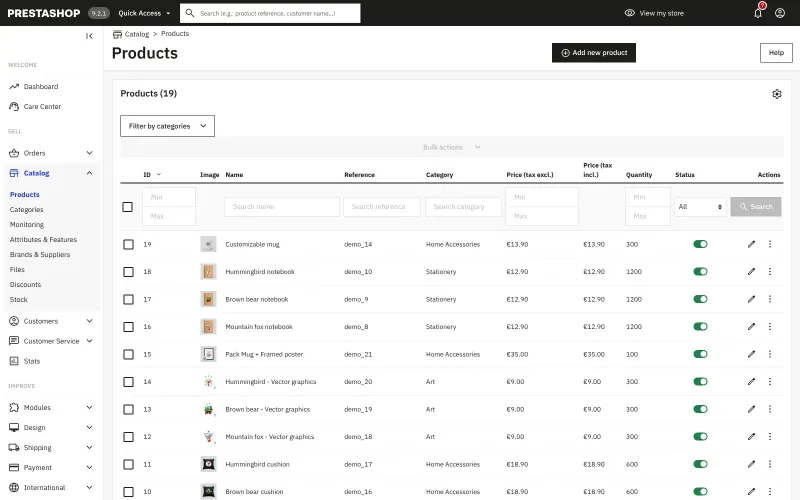
PrestaShop Small and mid-sized shops that want to own their store and customer data Code Open source Import from Shopify Partly Some setup
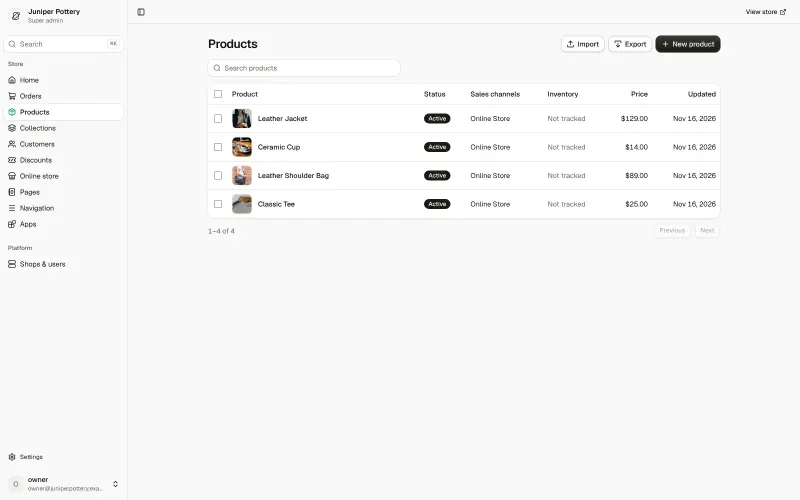
ShopNex Small shops that want a Shopify-style admin on their own server and are happy with young, fast-moving software Code Open source Import from Shopify Partly Some setup
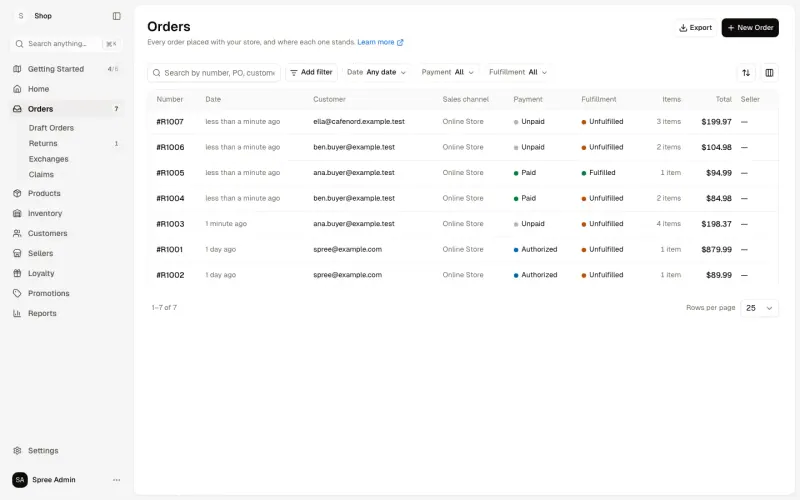
Spree Commerce Wholesalers, B2B sellers and marketplaces with a developer who want a store they fully own Code Open source Import from Shopify Partly Some setup

Why look for an alternative to Shopify?

Shopify is a hosted e-commerce platform: you pick a theme, add products and take payments, and Shopify runs the store, the hosting and the checkout, with an app store for extra features.

Shops look for an alternative because the costs grow with the business. When we checked Shopify's pricing page in November 2026, the Basic plan was $39 a month, or $29 a month billed yearly, and shops that use a payment provider other than Shopify Payments paid an extra 2% of each sale on that plan. Your shop also lives on Shopify's platform. A self-hosted shop such as WooCommerce or PrestaShop has no monthly platform fee and no cut of your sales, and your products, orders and customer data stay on your own server.

The alternatives, compared

WooCommerce

Our pick

Run your own online store on WordPress, with no fee on each sale.

A free WordPress plugin that gives you a full shop: physical and digital products with variations, a cart and checkout, orders, stock, coupons, shipping and tax, with Stripe and PayPal through free plugins. Shopify runs the hosting and updates for you and has a larger app store; with WooCommerce you look after the site, and subscriptions, bookings and memberships are paid extensions.

What you gain
  • No monthly platform fee and no cut of each sale from WooCommerce
  • Your products, orders and customer details stay on your own server
  • Your store can be exported and moved to another host at any time
What is different
  • You keep WordPress, WooCommerce and your plugins up to date and backed up yourself
  • Subscriptions, bookings and memberships are paid extensions, and premium themes cost extra
  • Your payment provider still charges its own card fees
Some setup Open source

Run your own online shop on open-source Laravel, with no sales fee.

An MIT-licensed shop built on Laravel, with variants, bundles, downloads and bookable products, orders with PDF invoices and refunds, returns, several currencies and languages, and Stripe and PayPal built in. It has a much smaller choice of themes and apps than Shopify, built-in shipping is flat rate or free only, and its multi-vendor marketplace, B2B selling and point of sale are paid extensions.

What you gain
  • No monthly platform fee and no platform cut of each sale
  • Your products, orders and customer data stay on your own server
  • Bookable products, returns and several currencies are in the free core
What is different
  • A much smaller choice of themes and apps than Shopify
  • A multi-vendor marketplace, B2B selling and point of sale are paid Webkul extensions
  • Shipping is flat rate or free; live carrier rates need an extension
Some setup Open source

A modern online store you own, with no monthly fee or cut of sales.

A modern, lightweight shop built with Node.js, React and PostgreSQL, with variants, orders, coupons, shipping zones, tax, a blog and page builder, and Stripe, PayPal and cash on delivery built in. It is aimed at developers who want to customise their store in JavaScript, and its extension choice is tiny next to Shopify's app store.

What you gain
  • No monthly plan and no platform fee on each sale; you pay your server and your payment provider's fees
  • Your products, orders and customer data stay on your server
  • A fast, modern storefront and admin built with React
What is different
  • A small catalogue of extensions and themes, all free, instead of Shopify's large app store
  • Product reviews, extra storage and email services come as extensions you add
  • Changing the look beyond the built-in settings means building a theme, usually with a developer
Some setup Open source

A self-hosted .NET shop for several stores, sellers and B2B buyers.

A .NET shop engine with more built in than most: several stores and a multi-vendor marketplace from one installation, B2B quotes and price lists, subscriptions, gift cards and reward points. Its code is public but it is not open source: the licence requires a "Powered by nopCommerce" link on every page unless you buy a removal key. Its app marketplace is smaller than Shopify's, and many of its themes and plugins are paid.

What you gain
  • No monthly platform fee and no platform cut of each sale
  • Several stores and a multi-seller marketplace at no extra plan cost
  • B2B price lists and quotes without a higher plan
What is different
  • Every page shows a "Powered by nopCommerce" link unless you buy a removal key
  • You look after updates, backups and security yourself
  • Fewer themes and apps than Shopify, and many are paid
Some setup Source-available

A self-hosted shop engine for large catalogues and several languages.

A dedicated shop engine with a large product catalogue, combinations such as size and colour, order workflows with PDF invoices, several stores from one back office, and many languages and currencies. It has no platform fee or sales fee, but many modules and themes on its Addons marketplace are paid, and its app ecosystem is smaller than Shopify's.

What you gain
  • No monthly platform fee and no platform cut of each sale
  • Your products, orders and customer data stay on your server
  • Full control of your theme, modules and store settings
What is different
  • You look after updates, backups and security yourself
  • Many useful modules and themes are paid extras
  • Fewer ready-made apps than Shopify
Some setup Open source

A Shopify-style online store you own, with no fee on your sales.

The closest to Shopify's own admin: orders, products with variants, customers, discounts, shipping rates and taxes laid out much like Shopify's, a themed storefront with a hosted checkout, Stripe payments and staff roles. It imports Shopify's product, customer, order and discount CSV exports. It is young, pre-1.0 software that changes weekly, with a small app catalogue next to Shopify's, and Shopify themes do not carry over.

What you gain
  • No monthly plan and no platform fee on each sale; you pay your server and Stripe's card fees
  • An admin laid out much like Shopify's, with orders, products, customers, discounts and apps
  • Your products, orders and customer data stay in your own database
What is different
  • ShopNex is young (version 0.15) and changes several times a week, so expect rough edges
  • Its app catalogue is much smaller than Shopify's app store
  • Shopify themes don't carry over; you choose one of ShopNex's themes or have one ported
Some setup Open source

Your own online store engine for retail, wholesale and marketplaces.

A headless store engine for wholesale, B2B and marketplaces, with price lists, customer groups and companies, several markets with their own currencies and languages, a multi-vendor marketplace with seller payouts, and Stripe built in, all in the free core. It has no shop front of its own: customers buy through a storefront a developer sets up and connects, and it has no theme store or app store like Shopify's.

What you gain
  • No monthly plan and no platform fee on each sale; you pay your server and your payment provider's card fees
  • Wholesale price lists, selling in several countries and a multi-vendor marketplace are in the free edition
  • Your products, orders and customer data stay on your server
What is different
  • The setup gives you the admin dashboard and your store's API; the shop customers see is a separate storefront a developer sets up and connects
  • There is no theme store or app store like Shopify's; changes beyond the settings are developer work
  • Shopify products and customers move across as CSV files, but orders do not
Some setup Open source

Moving from Shopify

Export your products from Shopify as a CSV file. WooCommerce's built-in product importer and PrestaShop's CSV import both bring products in, and PrestaShop's import also takes categories, customers and addresses. Bagisto imports products and customers from CSV or Excel files under Settings, Data Transfer, once you match Shopify's columns to its template, and EverShop imports products, categories, customers and addresses from CSV files in its own column format. nopCommerce has no Shopify importer, but it imports products, categories and customers from Excel files, so reshape Shopify's CSV into its format; third-party paid migration services also move Shopify stores to nopCommerce. Spree Commerce's migration guide imports Shopify's product and customer CSV exports by matching their columns, though not orders, and a developer connects a storefront before customers can buy. ShopNex imports Shopify's product, customer, order and discount CSV exports in its admin, though your theme has to be rebuilt in one of its own themes; create the owner account in its setup page straight after install. For the other apps, customers, orders and pages from Shopify need a migration tool: for WooCommerce, the paid Shopify Data Migrator extension on the WooCommerce Marketplace. Set up payments, shipping and tax, connect an email sending service so order emails go out, then point your domain at the new shop and add redirects from your old product addresses.

Questions

What is the best self-hosted alternative to Shopify?

Start with WooCommerce. All 7 are free to self-host. WooCommerce, Bagisto, EverShop, PrestaShop, ShopNex and Spree Commerce are open source; nopCommerce (source-available) publishes its code under a licence with conditions an open-source licence does not have, such as limits on reselling it, keeping the maker's branding or a paid key for some features.

Do WooCommerce, PrestaShop, Bagisto, EverShop, nopCommerce, Spree Commerce or ShopNex take a cut of each sale?

No. None of them charges a platform fee or a fee per sale. Your payment provider, such as Stripe or PayPal, still charges its own card fees.

Are there hidden costs compared with Shopify?

The apps are free, but some features are paid. WooCommerce sells extensions such as subscriptions, bookings and memberships, usually as yearly licences, PrestaShop's marketplace sells many modules and themes, and Bagisto's maker, Webkul, sells extensions such as a multi-vendor marketplace, B2B selling and point of sale. EverShop's extensions and theme are all free, and so is everything in ShopNex. nopCommerce is free to run, but removing its "Powered by nopCommerce" link needs a paid removal key, and many plugins on its marketplace are paid. Spree Commerce's maker sells an Enterprise Edition with features such as approval workflows and an audit trail, and its storefront needs a developer to set up and host. Premium themes for the others cost extra too.

Should I choose WooCommerce, PrestaShop, Bagisto, EverShop, nopCommerce, Spree Commerce or ShopNex?

Choose WooCommerce if you want your shop and your website or blog in one place on WordPress. Choose PrestaShop if you want a dedicated shop engine with several stores, languages and currencies managed from one back office. Choose Bagisto if you want an MIT-licensed shop on Laravel with bookable products and returns built in, or if your developer works in Laravel. Choose EverShop if your developer works in JavaScript and wants a lightweight store to build on. Choose nopCommerce for several stores, a multi-vendor marketplace or B2B quotes without paid extensions, and if you can keep its "Powered by nopCommerce" link or buy the key that removes it. Choose Spree Commerce if you sell wholesale or run a marketplace and have a developer to build and connect your storefront. Choose ShopNex if you want an admin that works like Shopify's and can bring your Shopify customers and orders with you, and you are comfortable with young software that changes often.

Is a self-hosted shop harder to run than Shopify?

A little. Shopify handles updates, backups and security for you. With a self-hosted shop you keep the software and its plugins up to date and set up email sending; Cloudgate installs it and handles the server and secure web address.

Are these Shopify alternatives really free?

Yes, WooCommerce, Bagisto, EverShop, nopCommerce, PrestaShop, ShopNex and Spree Commerce are free. To run them you need Cloudgate and a server. Use hosted Cloudgate, which can also provide the server, or install Cloudgate on a server of your own for free. Cloudgate's plans and prices are at cloudgate.octabyte.io/pricing. One server can run several apps.

Do I need a developer to replace Shopify?

No. Cloudgate installs the app you choose on your server and gives it a secure web address, and you use it in your browser instead of Shopify.